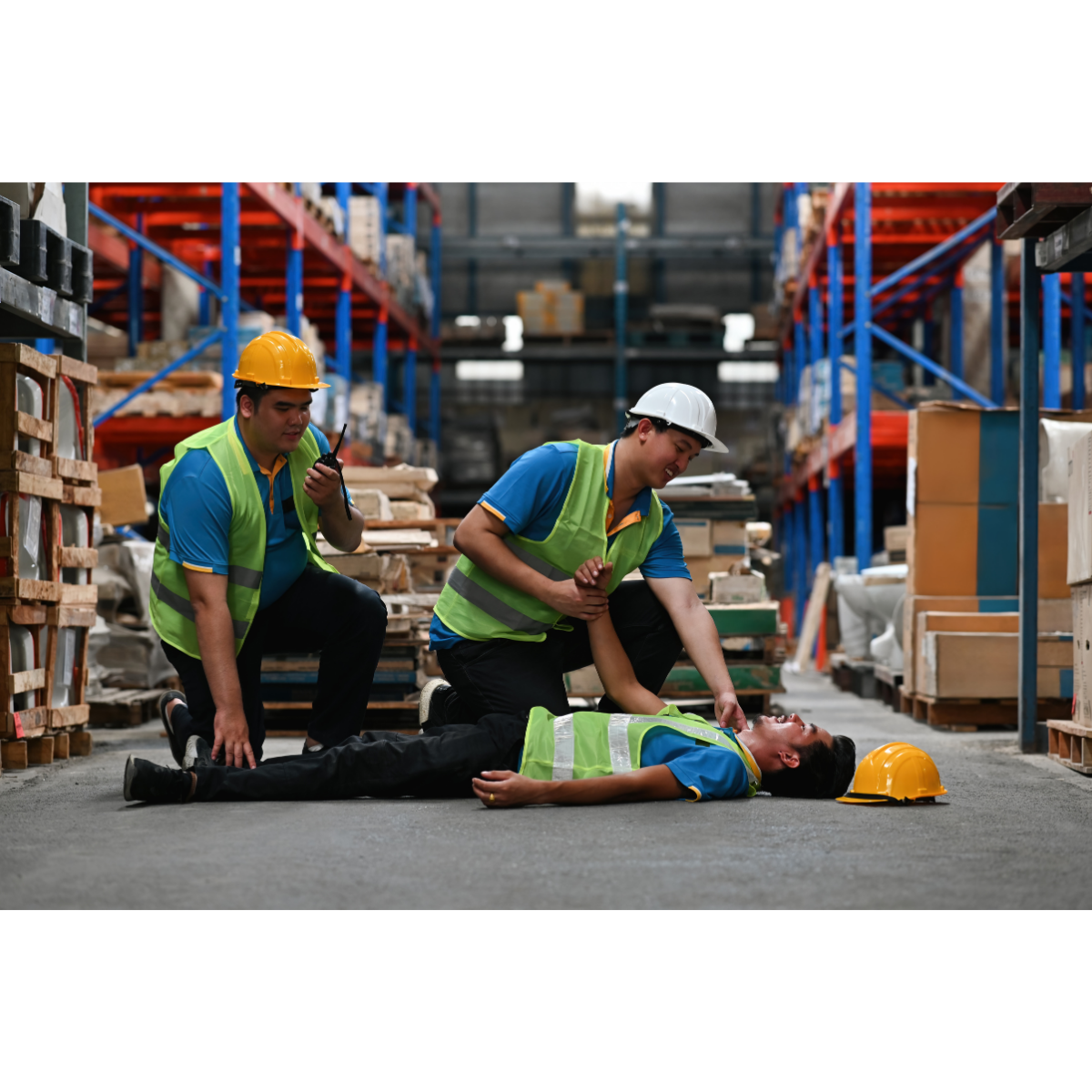
Do Businesses Legally Need First Aid Training in the UK?
It’s a question most businesses ask at some point:
“Do we legally need first aid training?”
The short answer is:
Yes — but not in the way many people expect.
There isn’t a fixed rule that says every business must send staff on a specific course.
Instead, the law requires something slightly different.
What the law actually says
UK employers must provide:
“adequate and appropriate equipment, facilities and personnel”
to ensure employees receive immediate attention if they are injured or taken ill at work.
That comes from the Health and Safety (First-Aid) Regulations 1981.
What does “adequate and appropriate” mean?
This is where the confusion comes in.
There is no one-size-fits-all answer.
What’s considered “adequate and appropriate” depends on:
the type of work you do
the level of risk
the size of your workforce
your working environment
This is why a first aid needs assessment matters
Before deciding on training, businesses should carry out a first aid needs assessment.
This looks at:
workplace hazards
likelihood of injury or illness
number of staff
shift patterns and lone working
access to emergency services
From that, you decide:
how many first aiders you need
what level of training is appropriate
Do all businesses need trained first aiders?
In most cases, yes.
Even in low-risk environments, you will usually need at least:
a trained first aider
oran appointed person responsible for first aid arrangements
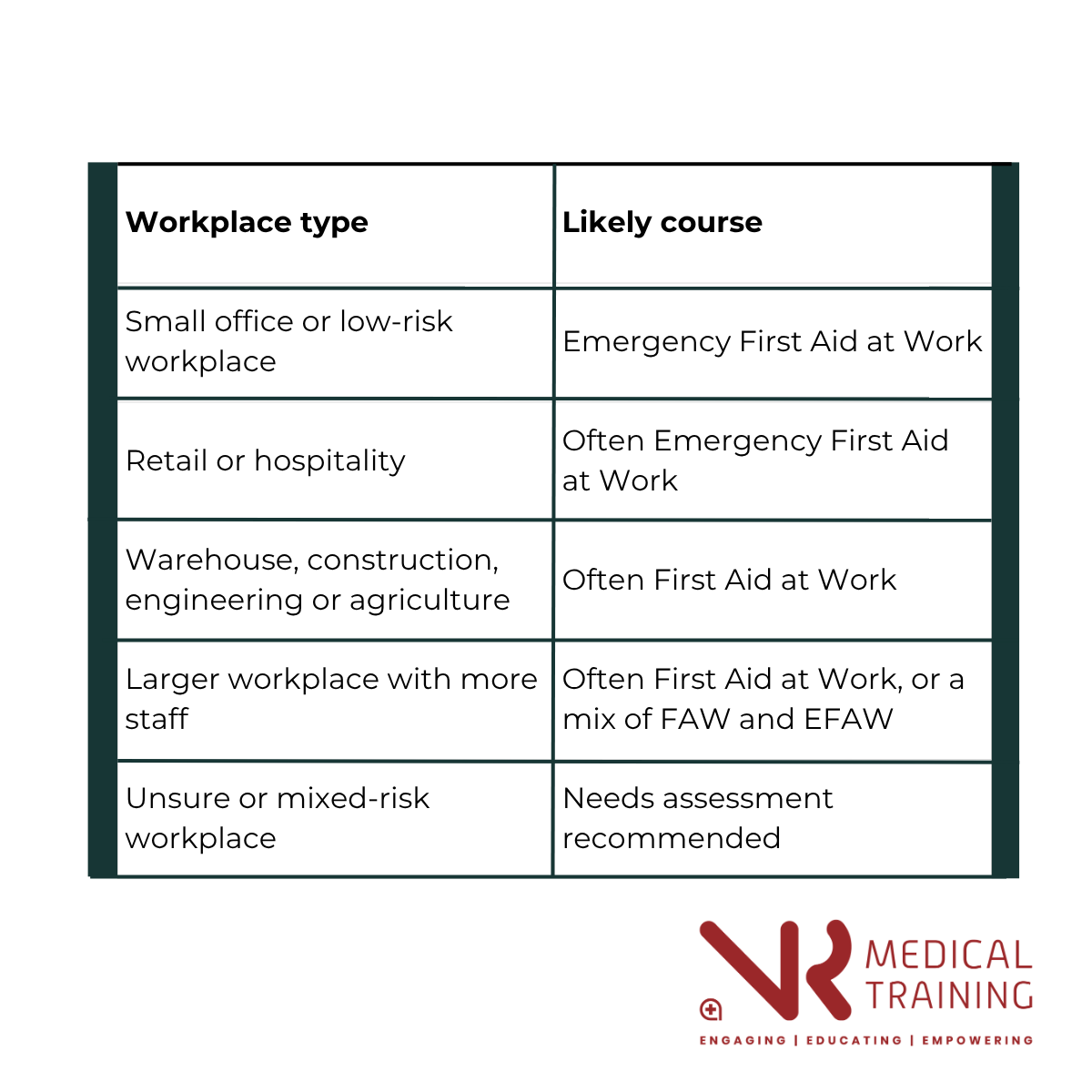
Which first aid course do you legally need?
This depends entirely on your risk level.
Low-risk workplaces
Examples:
offices
retail
small businesses
These often require:
👉 Emergency First Aid at Work (EFAW)
This covers:
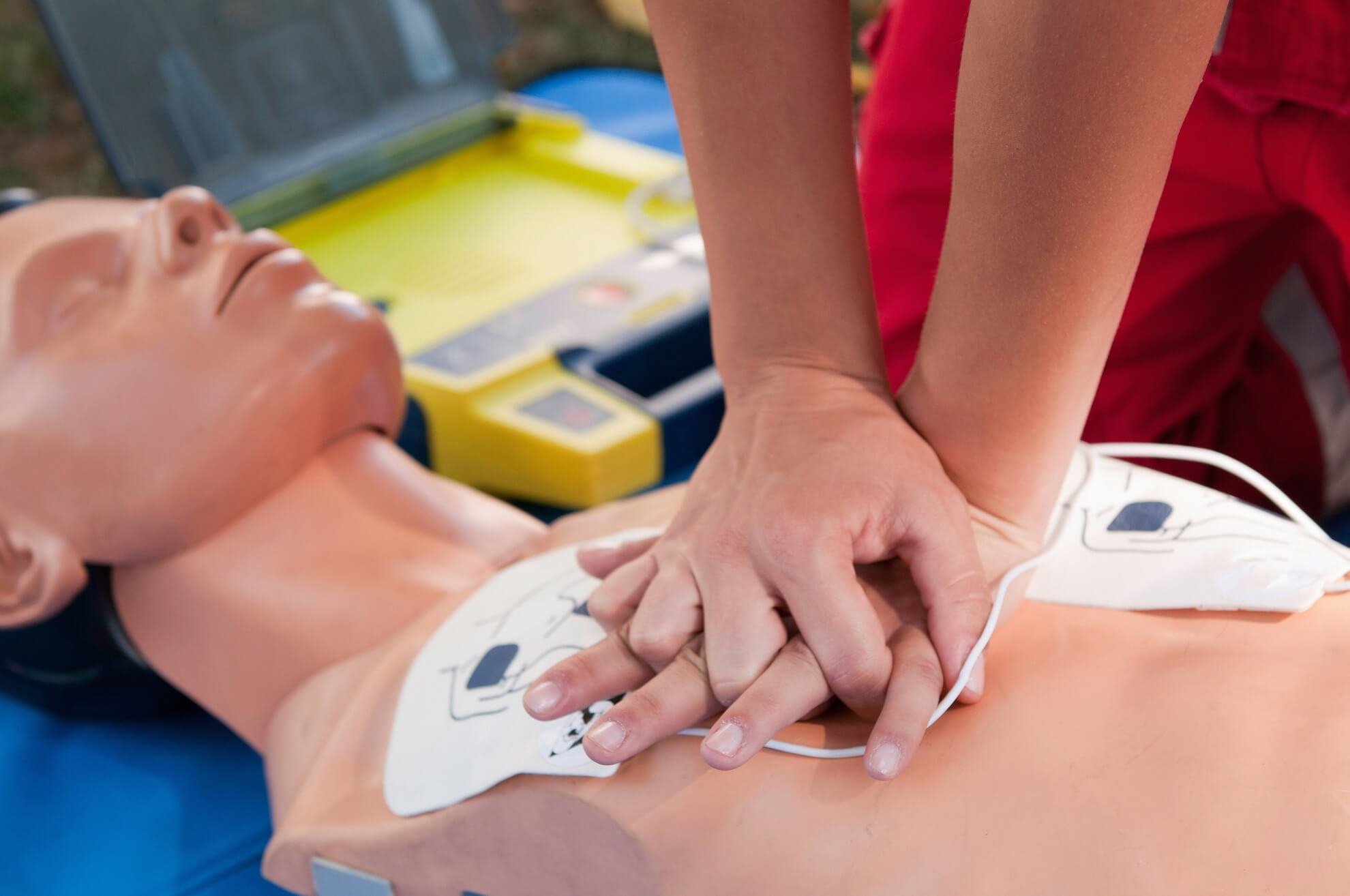
CPR and AED use
unresponsive casualties
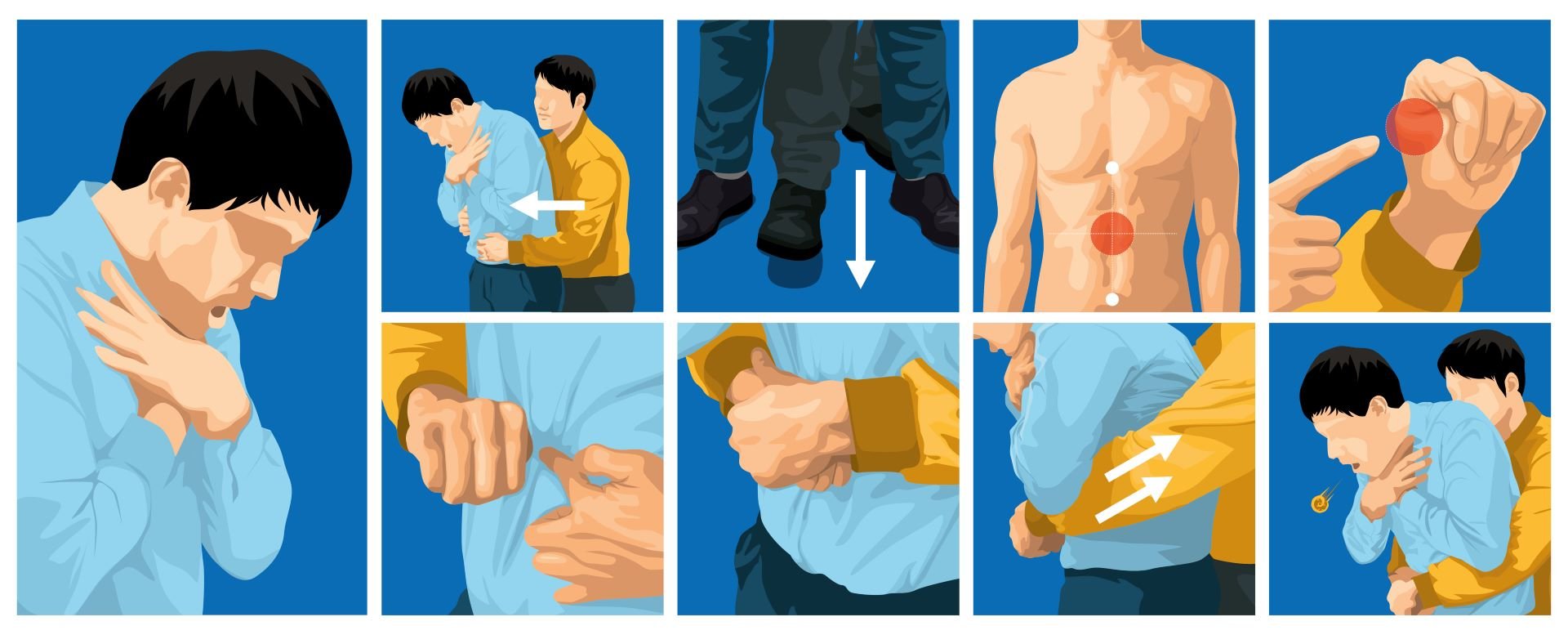
choking
bleeding and shock
Higher-risk workplaces
Examples:
construction
manufacturing
engineering
agriculture
These typically require:
This includes:
everything in EFAW
plus a wider range of injuries and illnesses
more in-depth training and assessment
Once you’ve worked out your level of risk, the next step is choosing the right course — our First Aid at Work vs Emergency First Aid at Work guide explains the difference clearly.
Common mistake: assuming one course fits all
A lot of businesses:
pick the cheapest option
assume EFAW covers everything
don’t review their risk properly
That can leave gaps in your first aid provision.
👉 The level of training should match your risk, not just your budget.
What happens if you don’t have the right provision?
If your first aid arrangements are not adequate:
you may be in breach of health and safety law
you could face enforcement action
more importantly, your staff may not be properly protected
How often does training need to be refreshed?
Most workplace first aid certificates:
are valid for 3 years
should be renewed before expiry
Many organisations also choose to run:
annual refreshers
short update sessions
What about online first aid training?
Online training can be useful for:
theory
awareness
But it does not replace practical training for workplace first aid requirements.
First aiders need to be able to:
perform CPR
use an AED
manage real scenarios
Not sure what your business needs?
If you’re unsure, the safest option is not to guess.
We can help you:
carry out a simple needs assessment
choose the right course
make sure your training meets requirements
Final thought
The law doesn’t tell you exactly which course to choose.
It expects you to make a reasonable, risk-based decision.
Get that right, and you’re not just meeting a requirement — you’re making sure your team is properly supported if something goes wrong.
First Aid Training for Businesses – FAQs
-
Yes, in most cases. Businesses must provide adequate and appropriate first aid provision, which often includes trained first aiders.
-
A first aid needs assessment is a review of your workplace risks, staff and environment to determine what level of first aid provision is required.
-
Usually yes. Even low-risk workplaces typically require some level of first aid provision.
-
In very low-risk environments this may be acceptable, but in most cases trained first aiders are recommended.
-
Every 3 years, with refresher training recommended in between.