Why First Aid Training Matters for Businesses
Most businesses know they should have first aid training.
But when you actually ask why, the answers are often vague.
“Because it’s required.”
“Because it’s good practice.”
That’s not the full picture.
First aid training matters because when something goes wrong at work, the first few minutes make a difference.
Emergencies don’t wait for the right conditions
Workplace incidents don’t happen at convenient times.
They happen:
mid-shift
when people are busy
when no one expects it
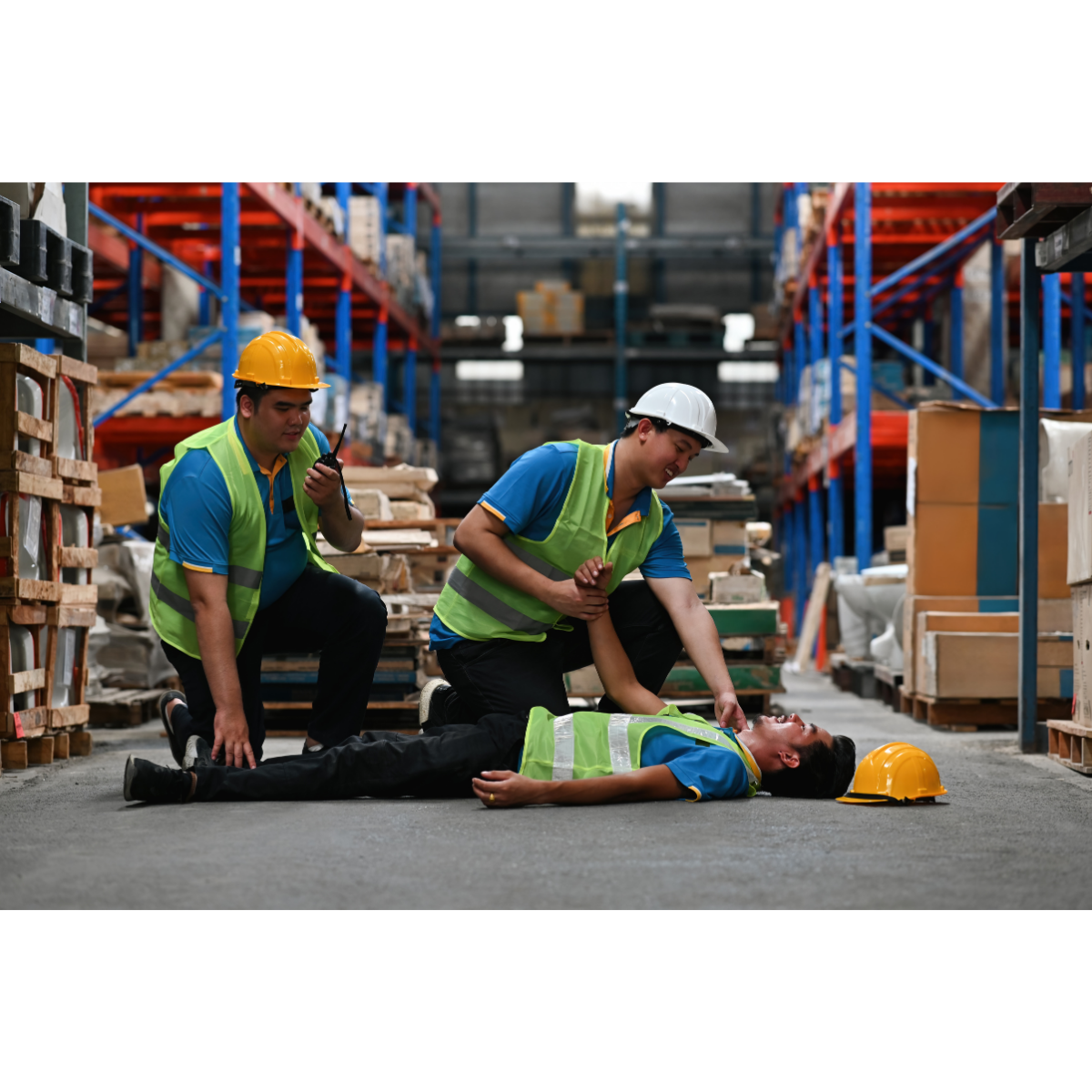
And in those moments, your team becomes the response.
Not an ambulance. Not a phone call.
Your team.
What the law actually expects
In the UK, employers must provide:
“adequate and appropriate equipment, facilities and personnel”
This comes from the Health and Safety (First-Aid) Regulations 1981.
There’s no fixed rule for every business.
You’re expected to:
assess your risks
decide what level of first aid cover is needed
make sure staff can respond properly
First aid training is not just a tick box
A lot of training ends up being treated like compliance.
Get people through a course.
File the certificate.
Move on.
The problem is:
👉 real emergencies don’t follow a script
People panic
They hesitate
They second guess themselves
Good training reduces that.

What properly trained staff can actually do
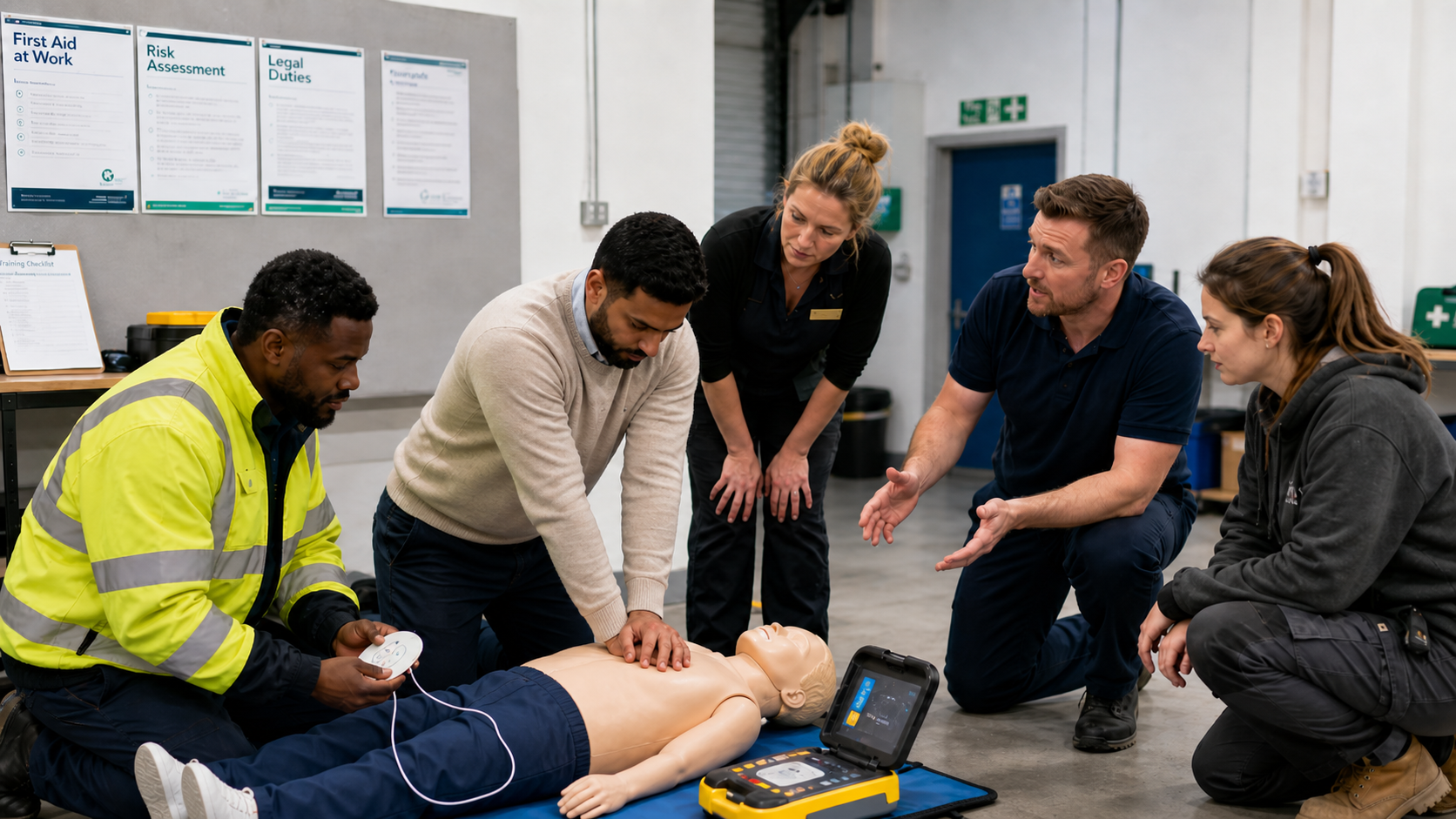
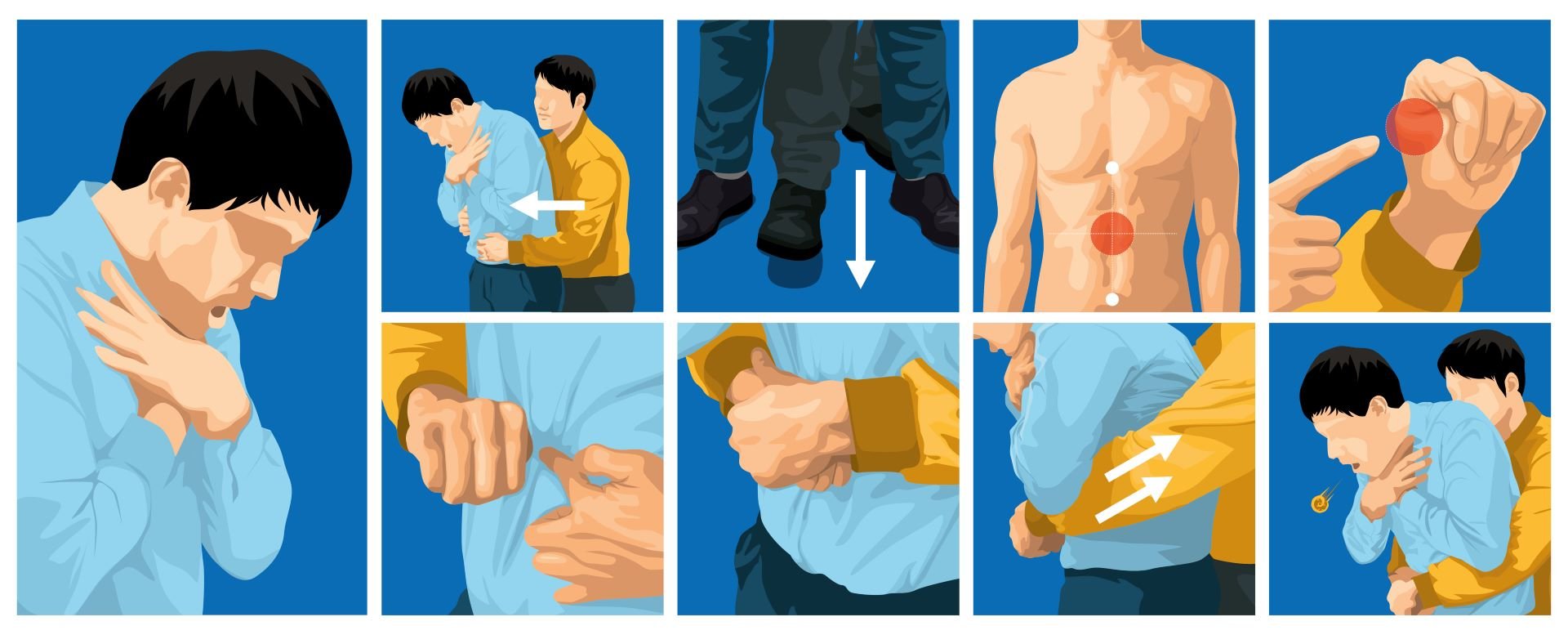
With the right training, staff can:
recognise when something is serious
take control of a situation early
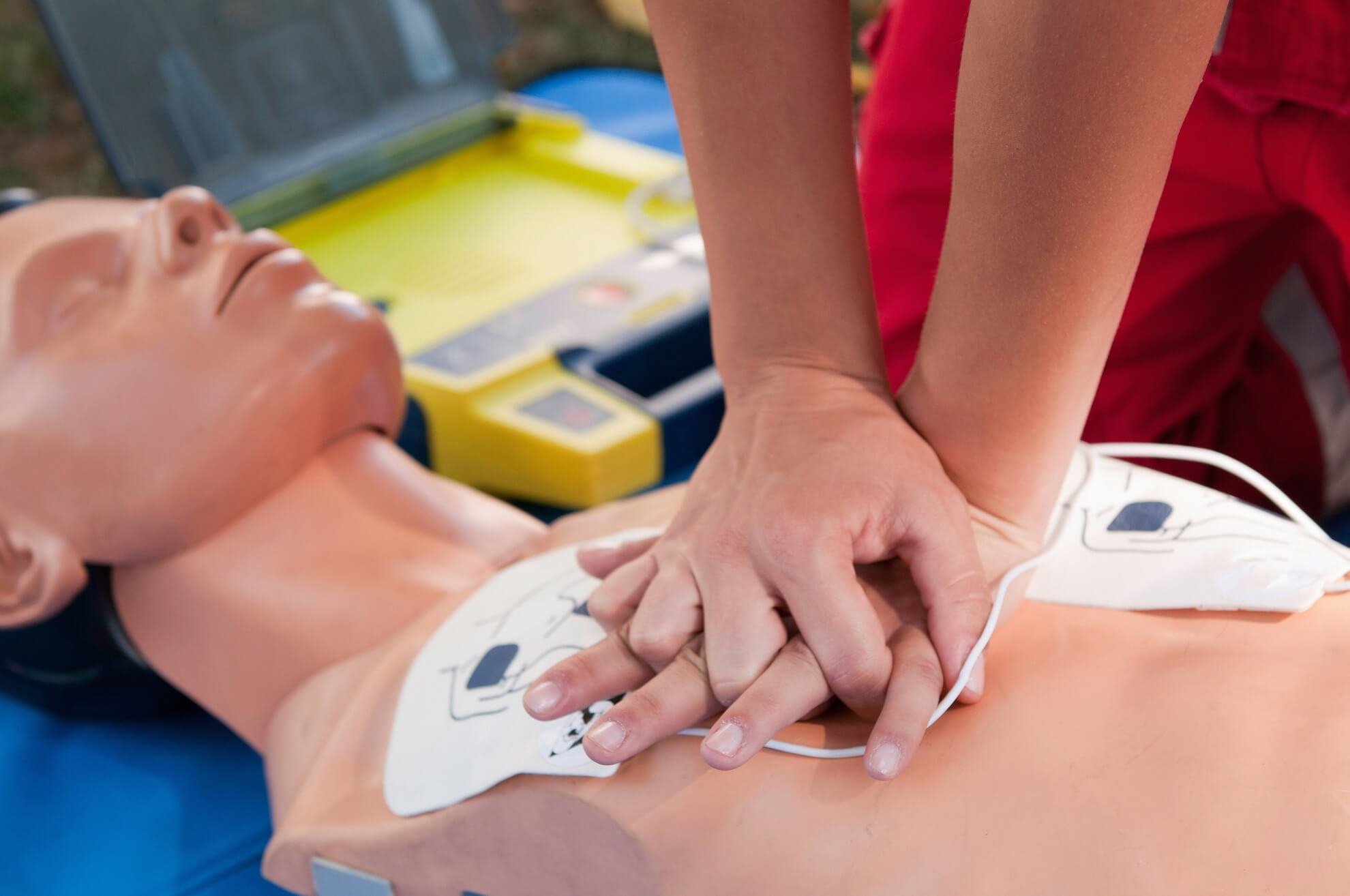
start treatment before help arrives
prevent conditions getting worse
support colleagues and customers properly
In many cases, that early response is what stabilises the situation.
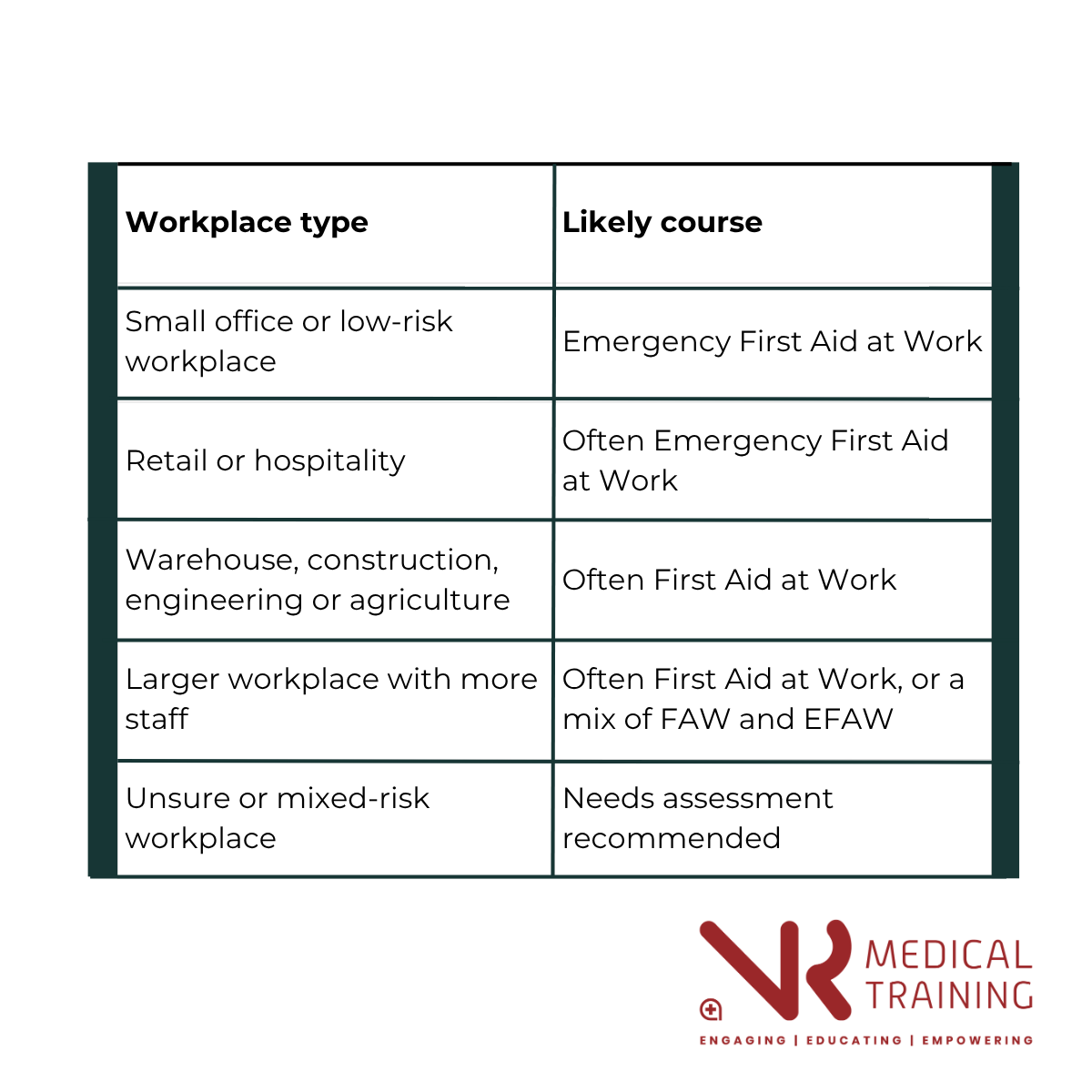
Choosing the right level of training matters
Not all first aid training is the same.
Most businesses fall into one of two categories:
Lower-risk environments
Examples:
offices
retail
small teams
These often need:
👉 Emergency First Aid at Work (1 day)
Higher-risk environments
Examples:
construction
engineering
manufacturing
agriculture
These often need:
Confidence is the real outcome
The biggest shift we see on courses is confidence.
At the start:
people are unsure
hesitant
worried about getting it wrong
By the end:
they act quicker
they follow a structure
they’re willing to step forward
That matters far more than memorising a list of steps.
Common mistakes businesses make
A few things come up regularly:
choosing the cheapest course rather than the right one
training too few staff
not covering holidays or shifts
letting certificates expire
assuming online training is enough
First aid training also protects your business
This often gets overlooked.
Proper first aid provision can:
reduce the severity of incidents
support staff wellbeing
reduce disruption
show due diligence
protect your reputation
It’s not just about compliance — it’s about capability.
How often should training be refreshed?
Most workplace first aid certificates last:
👉 3 years
But skills fade much faster than that.
That’s why refresher training is recommended.
Final thought
First aid training is not about passing a course.
It’s about making sure that when something happens, someone can step forward and deal with it.
That’s what makes the difference.
FAQ SECTION
-
Because it prepares staff to respond to emergencies quickly, which can reduce the severity of injuries and improve outcomes.
-
Yes, businesses must provide adequate and appropriate first aid provision based on their risks and workforce.
-
It depends on your workplace risk. Lower-risk environments may need Emergency First Aid at Work, while higher-risk workplaces may need First Aid at Work.
-
Most certificates last 3 years, with refresher training recommended in between.
-
Online training can support awareness, but practical, face-to-face training is usually required for workplace first aid.