What First Aid Training Does My Business Need?
If you run a business, one of the most common questions is:
“What first aid training do we actually need?”
The answer depends on your workplace.
There isn’t one course that fits every business. An office, a warehouse, a construction site and a care setting all carry different risks.
So the right first aid training should be based on your people, your environment and the type of incidents that could realistically happen.
Start with a first aid needs assessment
Before choosing a course, you should carry out a first aid needs assessment.
This helps you decide:
what level of first aid cover you need
how many first aiders you should have
what training is appropriate
whether extra equipment or arrangements are needed
The HSE says first aid provision must be “adequate and appropriate”, and that this depends on the nature of your work and where it takes place.
What should your needs assessment consider?
A good first aid needs assessment looks at:
the type of work being carried out
workplace hazards
number of staff
shift patterns
lone working
previous accidents or near misses
access to emergency services
whether members of the public are on-site
This matters because HSE cannot tell every employer exactly what provision to make. The employer is expected to decide what is suitable for their own workplace.
Which first aid course does your business need?
For most businesses, the main choice is between:
Both are workplace first aid courses, but they are not the same.
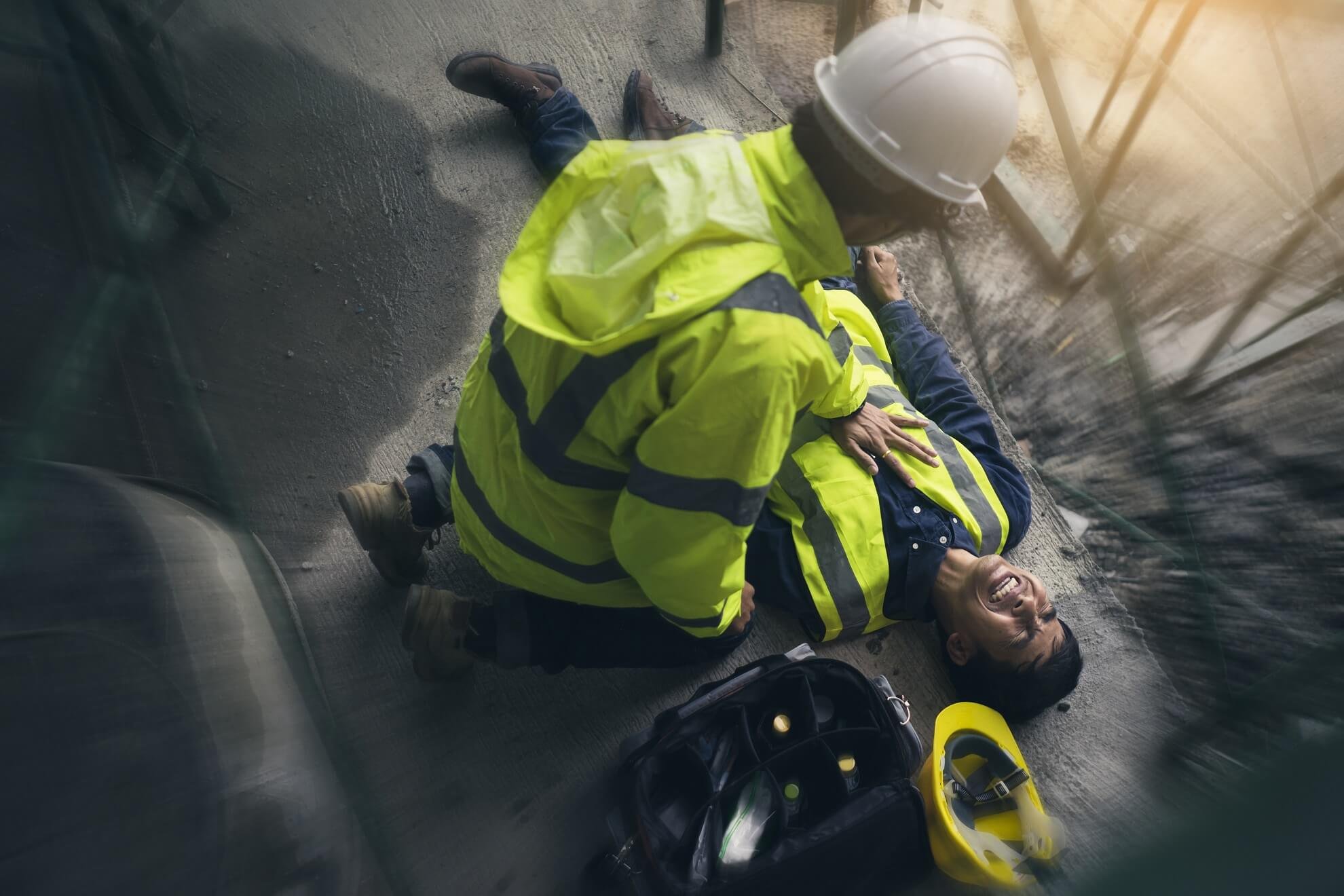
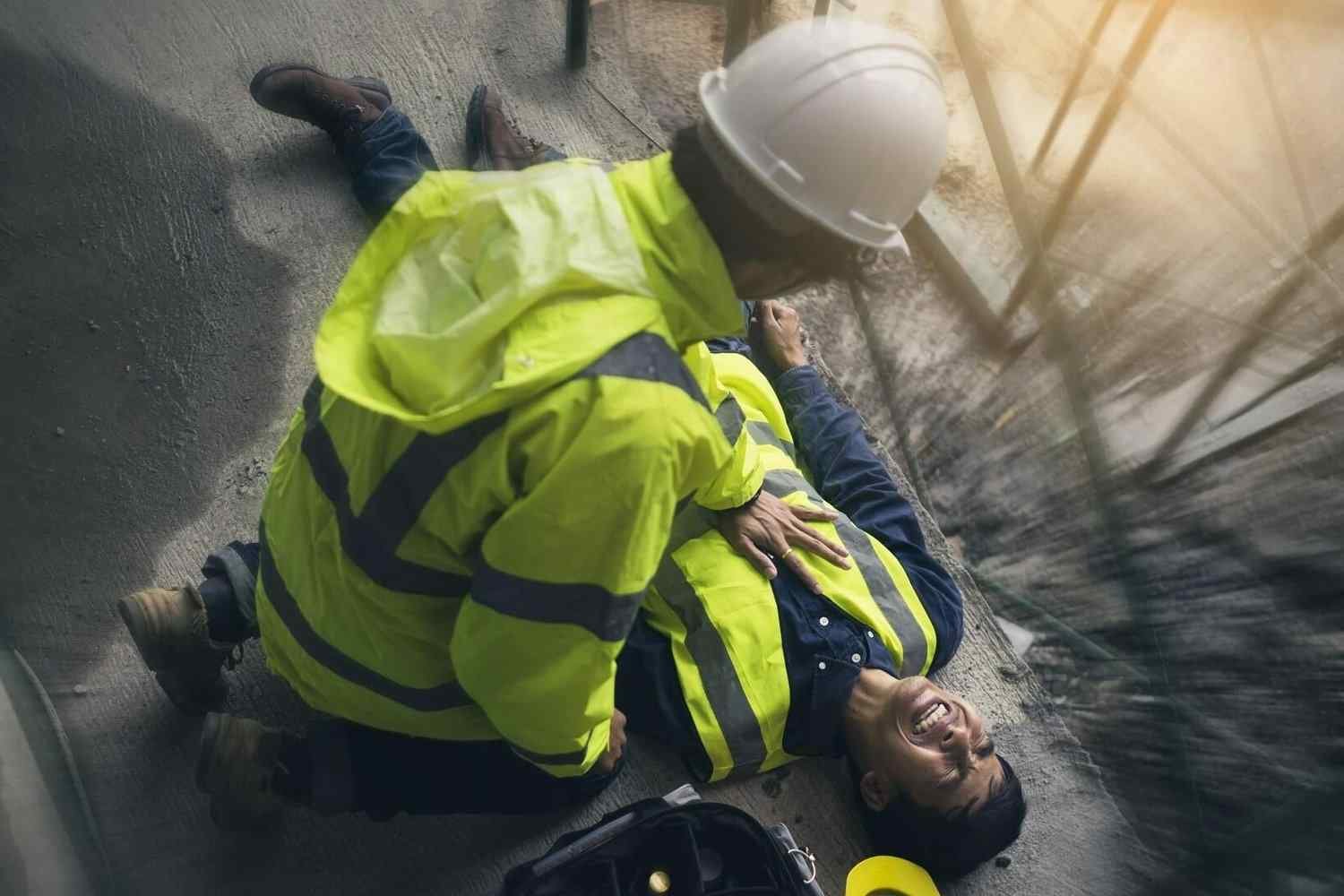
Emergency First Aid at Work (EFAW)
Emergency First Aid at Work is a 1-day course.
It is usually suitable for lower-risk workplaces where staff need to respond to immediate emergencies.
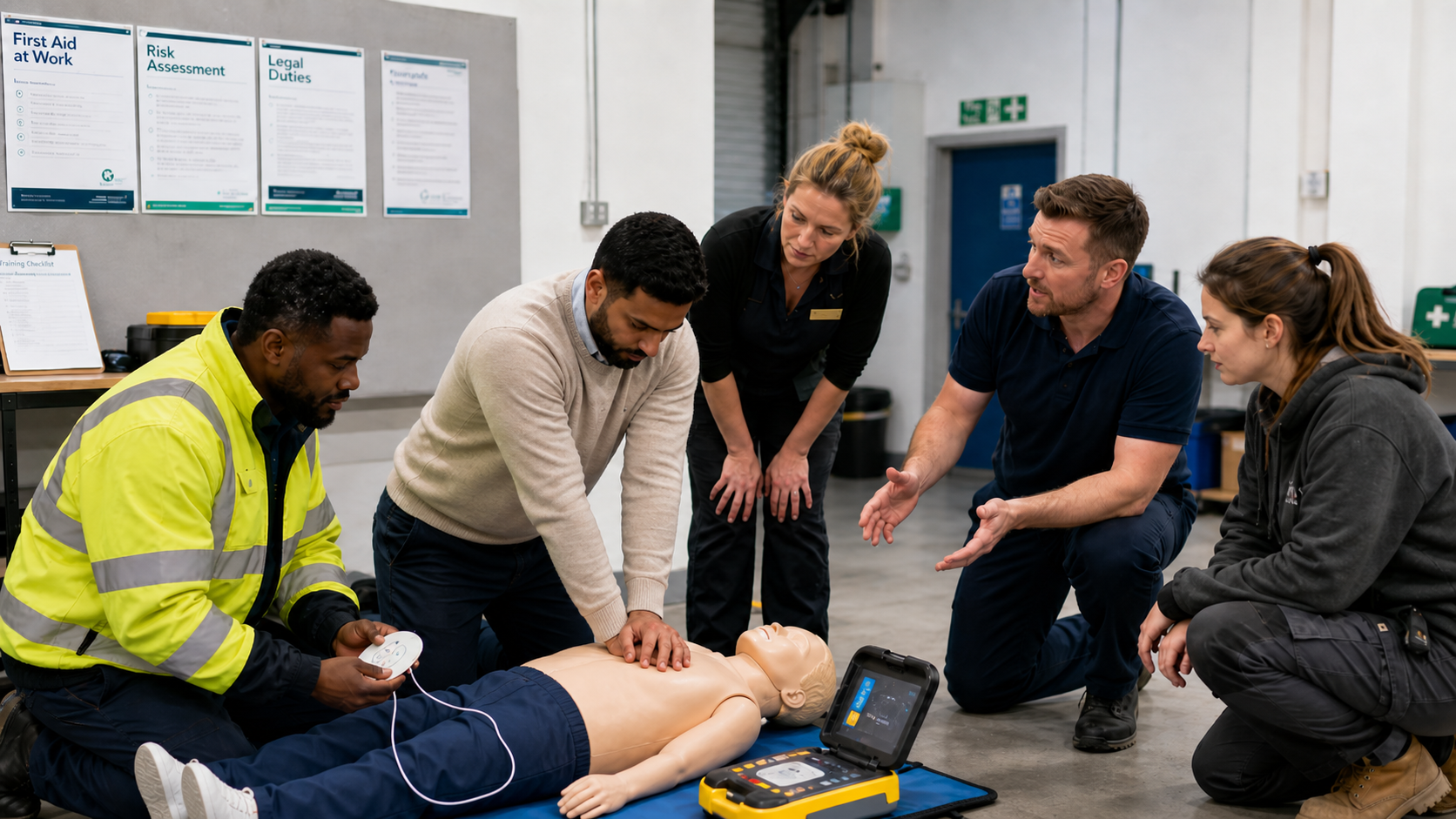
It covers key lifesaving skills such as:
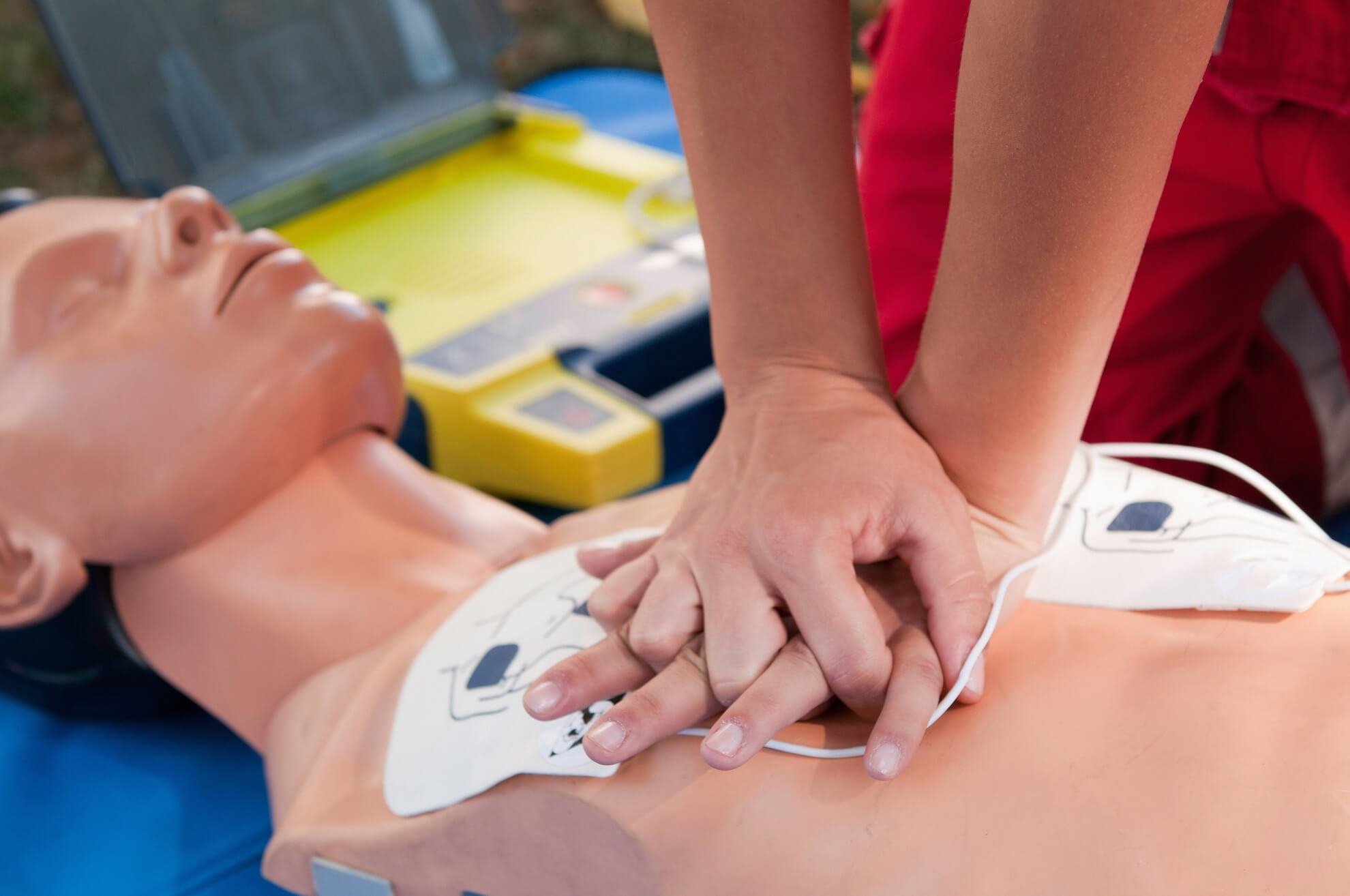
CPR and AED use
unresponsive casualties
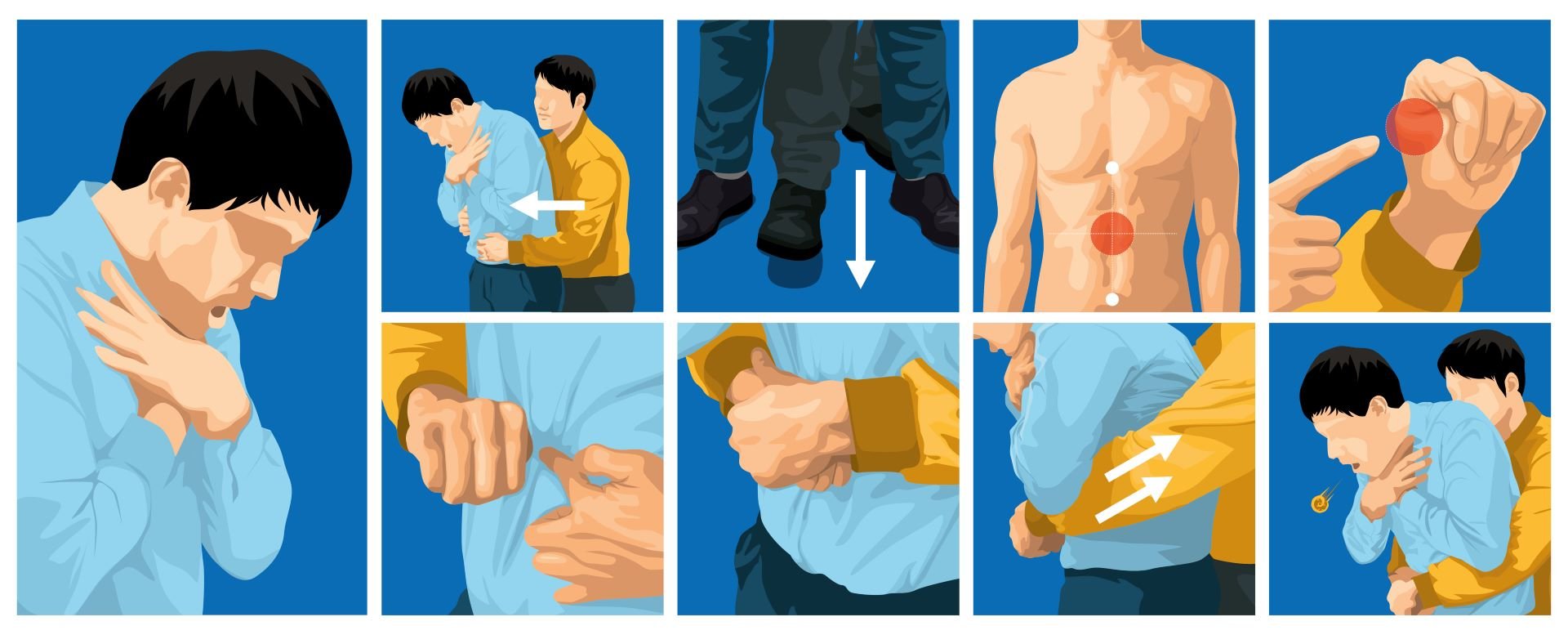
choking
bleeding and shock
basic workplace emergency response
First Aid at Work (FAW)
First Aid at Work is a 3-day course.
It is usually more suitable for higher-risk workplaces or places where staff need a broader level of first aid cover.
It covers everything in EFAW, plus a wider range of injuries and illnesses.
This may include:
fractures, sprains and strains
burns and scalds
asthma, anaphylaxis, heart attack and stroke
head and spinal injuries
full casualty assessment
HSE explains that First Aid at Work training includes the EFAW syllabus and also prepares first aiders to deal with a wider range of specific injuries and illnesses.
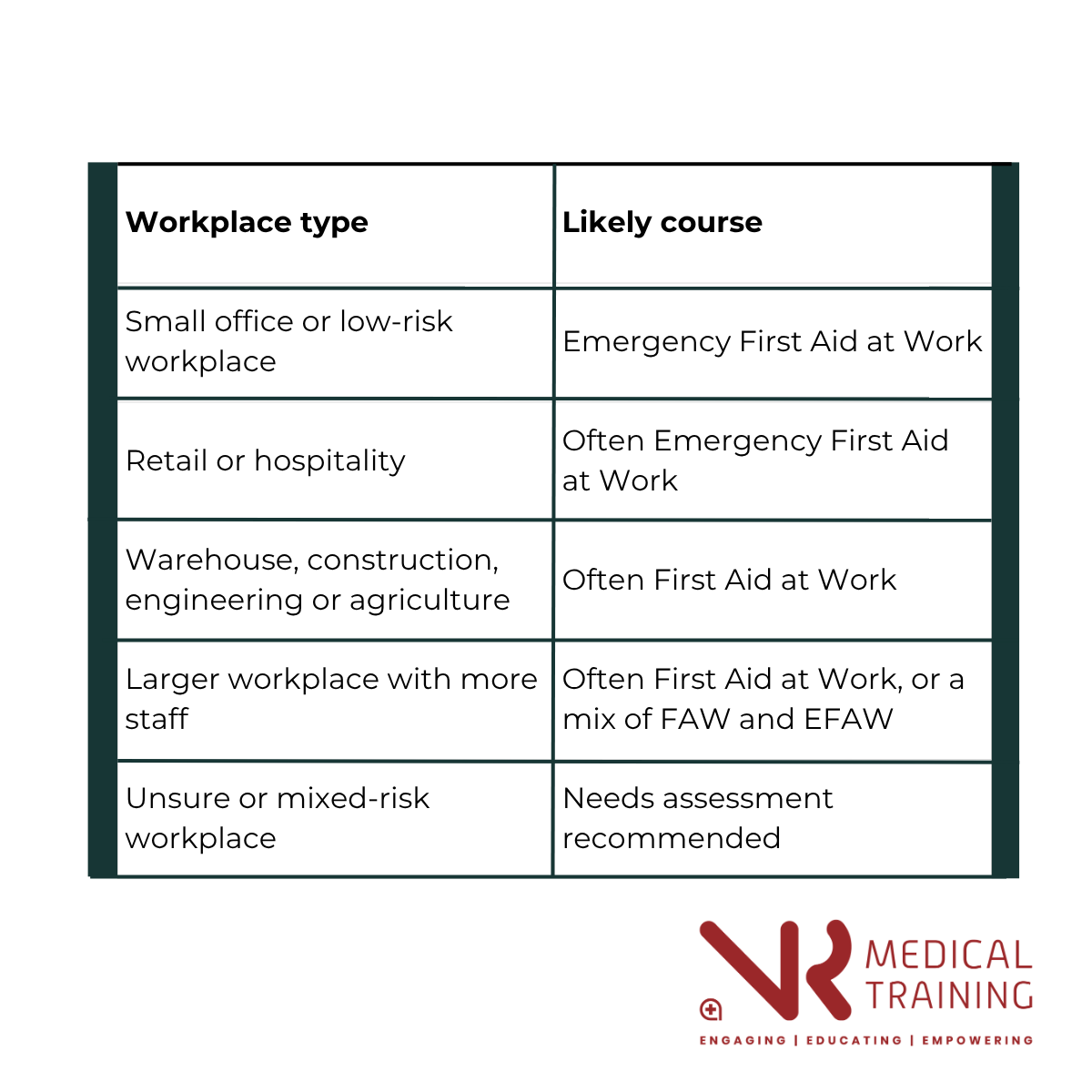
FAW vs EFAW: quick guide
For a clearer side-by-side breakdown, read our guide:
👉 First Aid at Work vs Emergency First Aid at Work
How many first aiders does your business need?
There are no fixed numbers that apply to every workplace.
You need to think about:
how many staff are on-site
shift patterns
holidays and sickness
whether staff work alone
whether teams are spread across different areas
how quickly emergency help could arrive
HSE confirms there are no hard and fast rules for the exact number of trained first aiders. The decision should come from your first aid needs assessment.
Do small businesses need first aid training?
Usually, yes.
Even small businesses need to make suitable first aid arrangements.
In a very low-risk workplace, an appointed person may be enough. But an appointed person is not the same as a trained first aider.
For many small businesses, training at least one person in Emergency First Aid at Work is the safer and more practical option.
What about higher-risk workplaces?
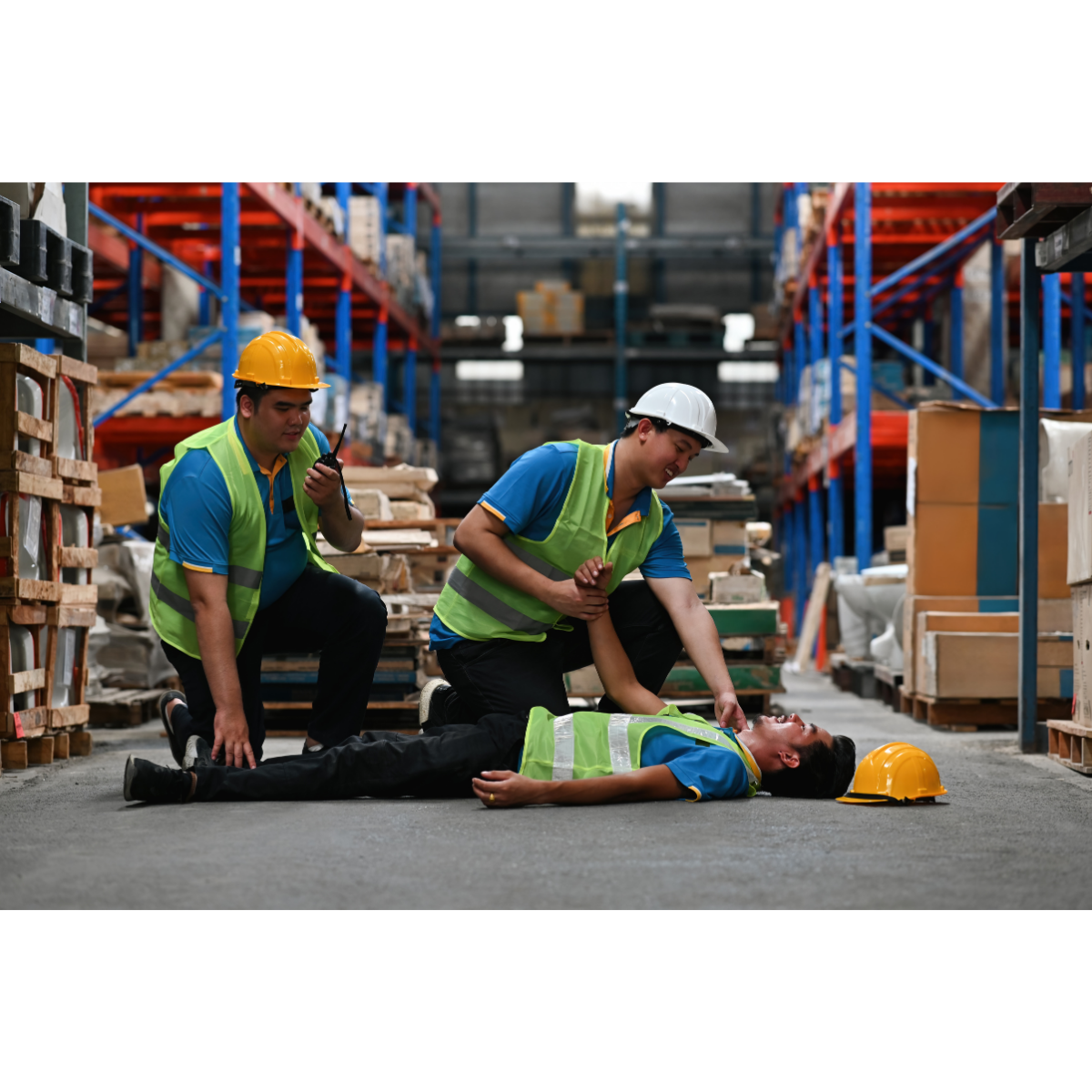
If your work involves higher risk, you should be more cautious.
This may include:
construction
manufacturing
engineering
agriculture
transport
warehousing
practical or manual work
In these settings, First Aid at Work is often more appropriate because the course covers a wider range of injuries and medical conditions.
In some higher-risk roles, particularly within security or specialist environments, organisations may also consider a higher level of training such as FREC 3, where there is an operational need for more advanced pre-hospital care.
Should everyone do the same course?
Not always.
Some businesses may need a mix.
For example:
a few staff trained in First Aid at Work
extra staff trained in Emergency First Aid at Work
annual refresher training to keep skills current
This can give wider cover without overtraining every member of staff.
How long do first aid certificates last?
Most workplace first aid certificates last 3 years.
HSE also strongly recommends annual refresher training to help first aiders keep their basic skills up to date.
You can read more here:
👉 How Long Does a First Aid Certificate Last in the UK?
Is online first aid training enough?
Online training can help with awareness and theory.
But for workplace first aid, practical skills matter.
Staff need to practise:
CPR
AED use
recovery position
choking treatment
bleeding control
For regulated workplace first aid, online-only training is usually not enough.
You can read more here:
👉 Is Online First Aid Training Enough?
Common mistakes businesses make
A few things come up a lot:
choosing the cheapest course rather than the right one
not doing a needs assessment
forgetting certificate expiry dates
training too few staff
not covering holidays, sickness or shifts
assuming online-only training is enough
Most of these are easy to fix once you look at the risks properly.
Still not sure what you need?
If you’re unsure, don’t guess.
We can help you work through:
your workplace risk
staff numbers
course options
how many first aiders you may need
Final thought
The right first aid training is not about ticking a box.
It’s about making sure someone can step forward when something happens at work.
For some businesses, Emergency First Aid at Work is enough.
For others, First Aid at Work is the better fit.
The key is matching the training to the real risks in your workplace.
First Aid Training for Businesses – FAQs
-
It depends on your first aid needs assessment. Low-risk workplaces may need Emergency First Aid at Work, while higher-risk workplaces may need First Aid at Work.
-
It may be enough for low-risk workplaces, but higher-risk workplaces often need First Aid at Work.
-
There are no fixed numbers for every business. You should decide based on workplace risk, staff numbers, shifts, sickness cover and site layout.
-
Small businesses still need suitable first aid arrangements. Depending on risk, this may include a trained first aider or an appointed person.
-
Online training can support awareness, but practical, face-to-face training is usually needed for regulated workplace first aid.