First Aid at Work vs Emergency First Aid at Work: Which Course Do You Need?
If you’re trying to decide between First Aid at Work (FAW) and Emergency First Aid at Work (EFAW), you’re not alone.
It’s one of the most common questions businesses ask.
On paper, they look similar.
In reality, they’re designed for different levels of risk, responsibility and coverage.
This guide breaks it down clearly so you can choose the right option.
Quick Comparison EFAW vs. FAAW
What is Emergency First Aid at Work (EFAW)?
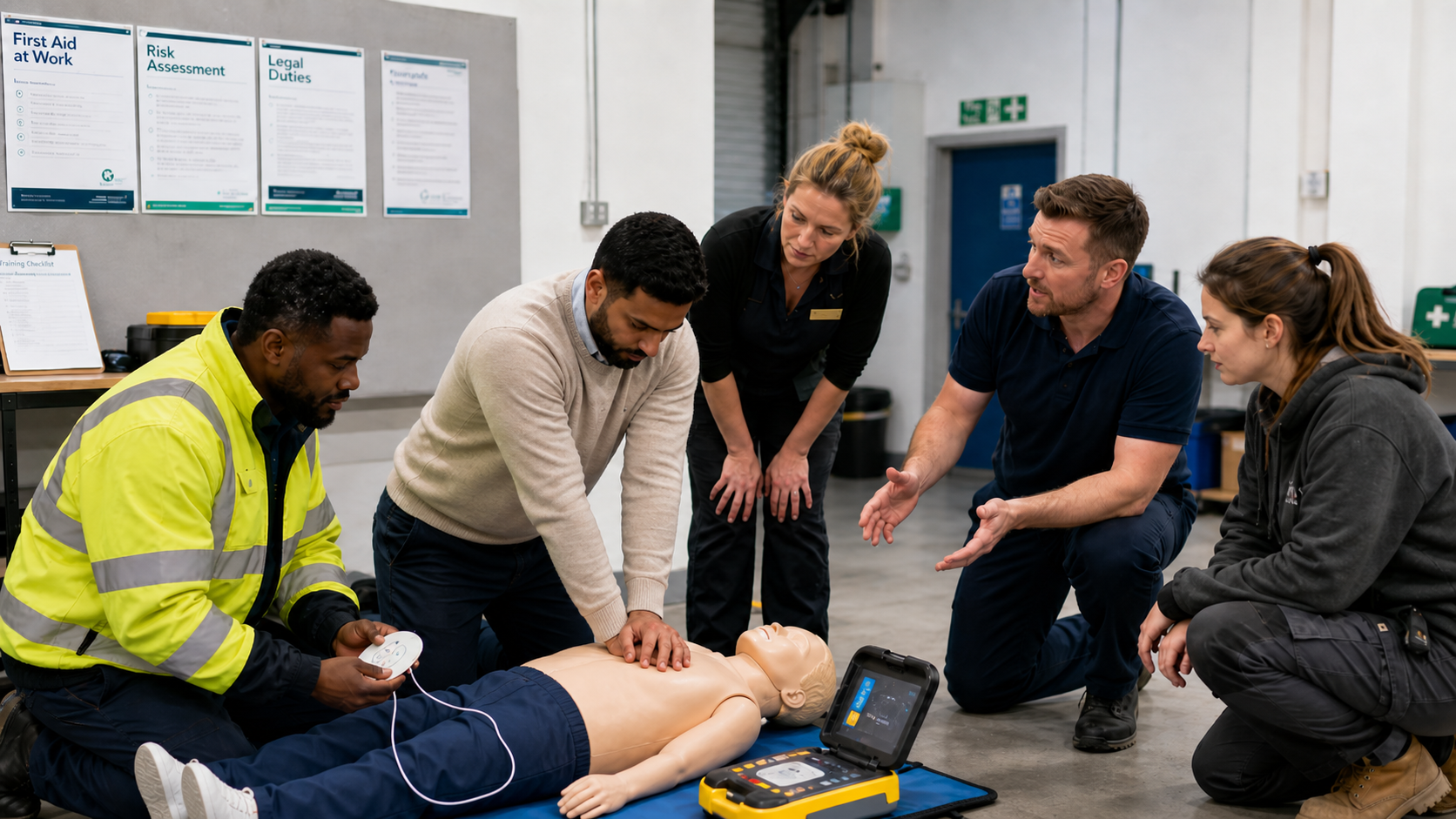
Emergency First Aid at Work is a 1-day course focused on dealing with immediate, life-threatening situations.
It’s designed to give learners the ability to:
recognise an emergency quickly
take control of the situation
provide care until help arrives
It typically covers:
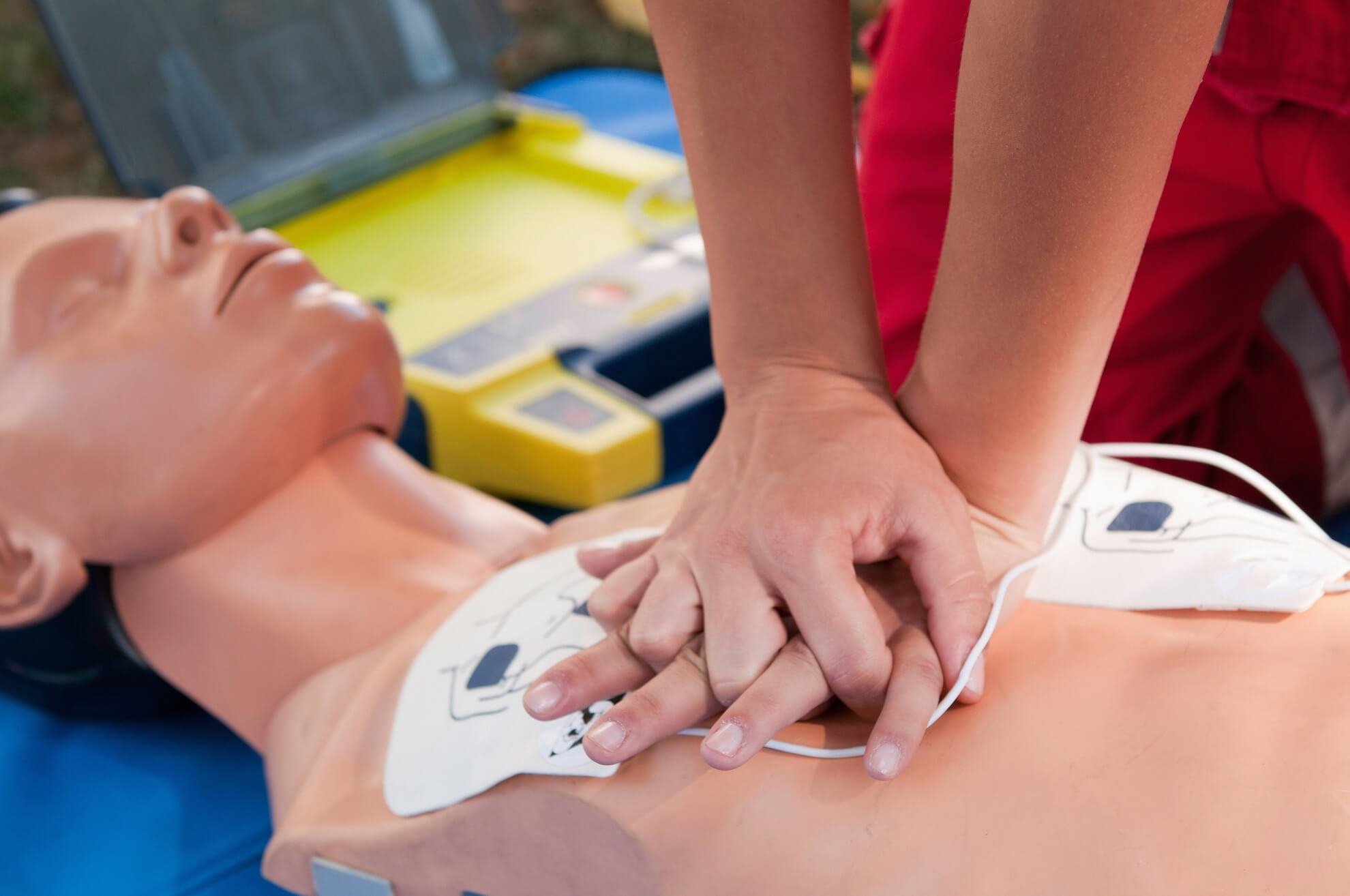
CPR and AED use
unresponsive casualties
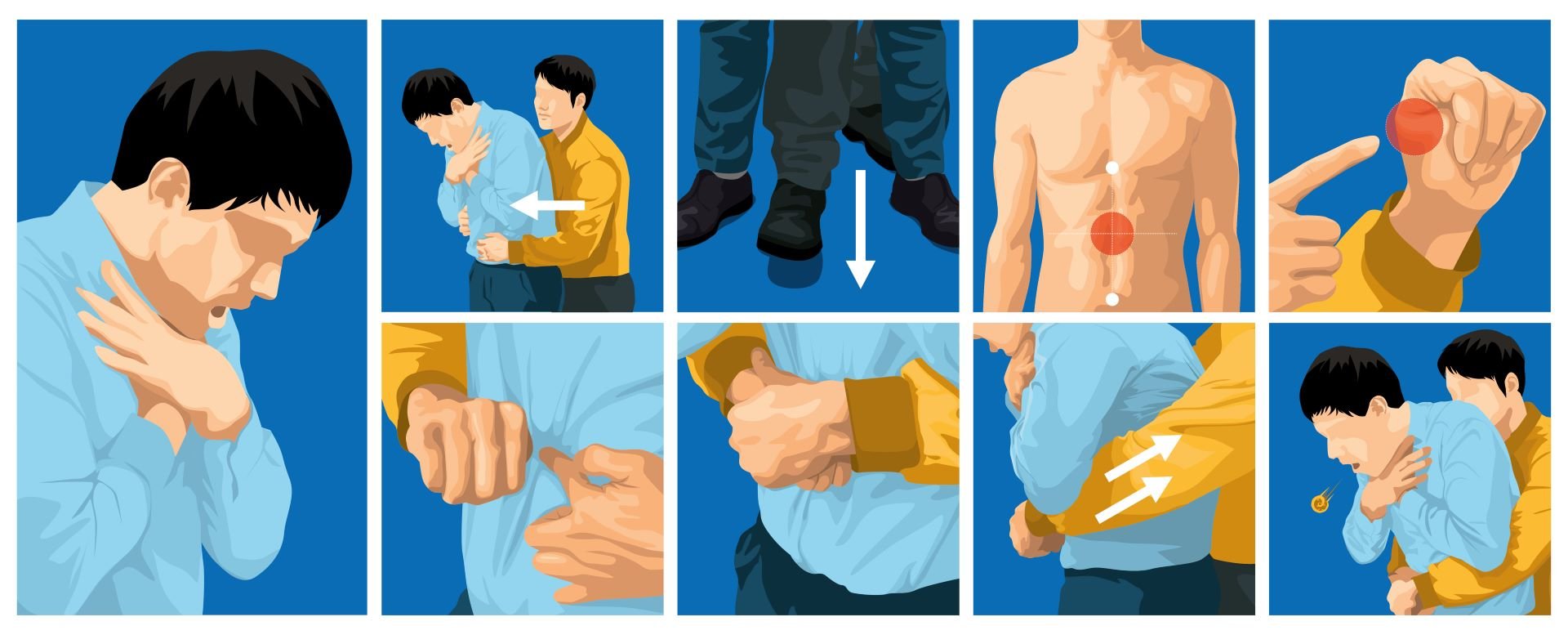
choking
severe bleeding
shock
What is First Aid at Work (FAW)?
First Aid at Work is a 3-day course that goes much further.
It includes everything in EFAW, but also covers:
a wider range of injuries and illnesses
fractures, burns and soft tissue injuries
medical conditions such as asthma, seizures and heart problems
full casualty assessment
This course prepares learners to manage incidents more independently and for longer.
The key difference (simple)
EFAW = immediate emergency response
FAW = broader care and deeper understanding
Both are valuable. The right one depends on your environment.
Which course does your business actually need?
This is the part that matters.
The decision should be based on your first aid needs assessment, not guesswork.
You need to consider:
your working environment
the level of risk
number of staff
nature of your work
EFAW is usually suitable if:
your workplace is low risk (offices, retail, small businesses)
serious injuries are unlikely
you need cover for emergencies
FAW is usually required if:
your workplace involves higher risks (construction, manufacturing, engineering)
there is potential for serious injury
you need a more comprehensive level of first aid cover
Common mistake: choosing based on price
A lot of businesses default to EFAW because it’s shorter and cheaper.
That can be the wrong decision.
If your workplace risk is higher, EFAW may not provide enough coverage.
👉 The course should match the risk — not the budget.
Legal requirements (UK)
UK employers must provide:
“adequate and appropriate equipment, facilities and personnel”
There’s no one-size-fits-all answer.
You’re expected to:
carry out a first aid needs assessment
choose the appropriate level of training
ensure sufficient cover is in place
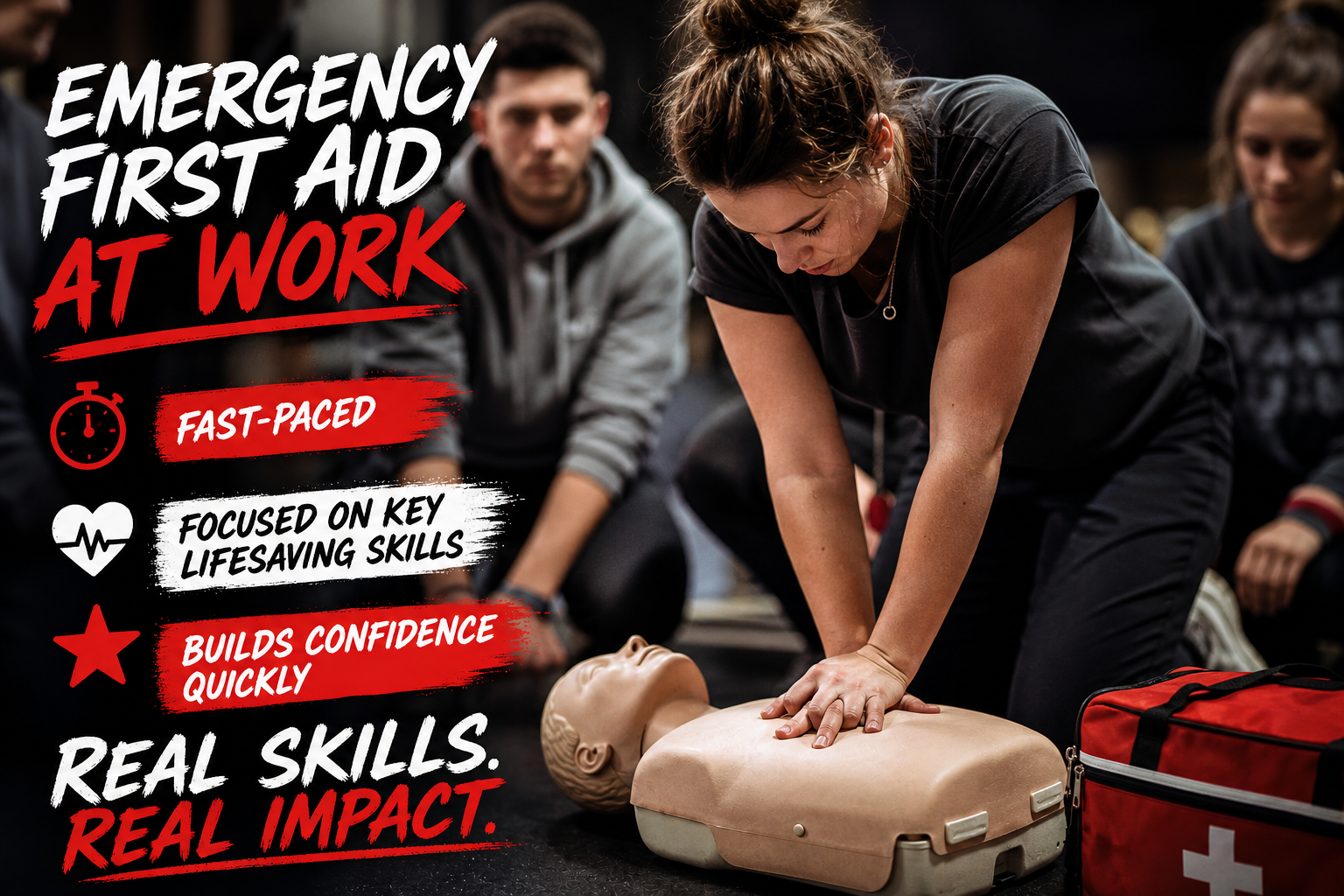
How the courses feel in practice
Emergency First Aid at Work
fast-paced
focused on key lifesaving skills
builds confidence quickly
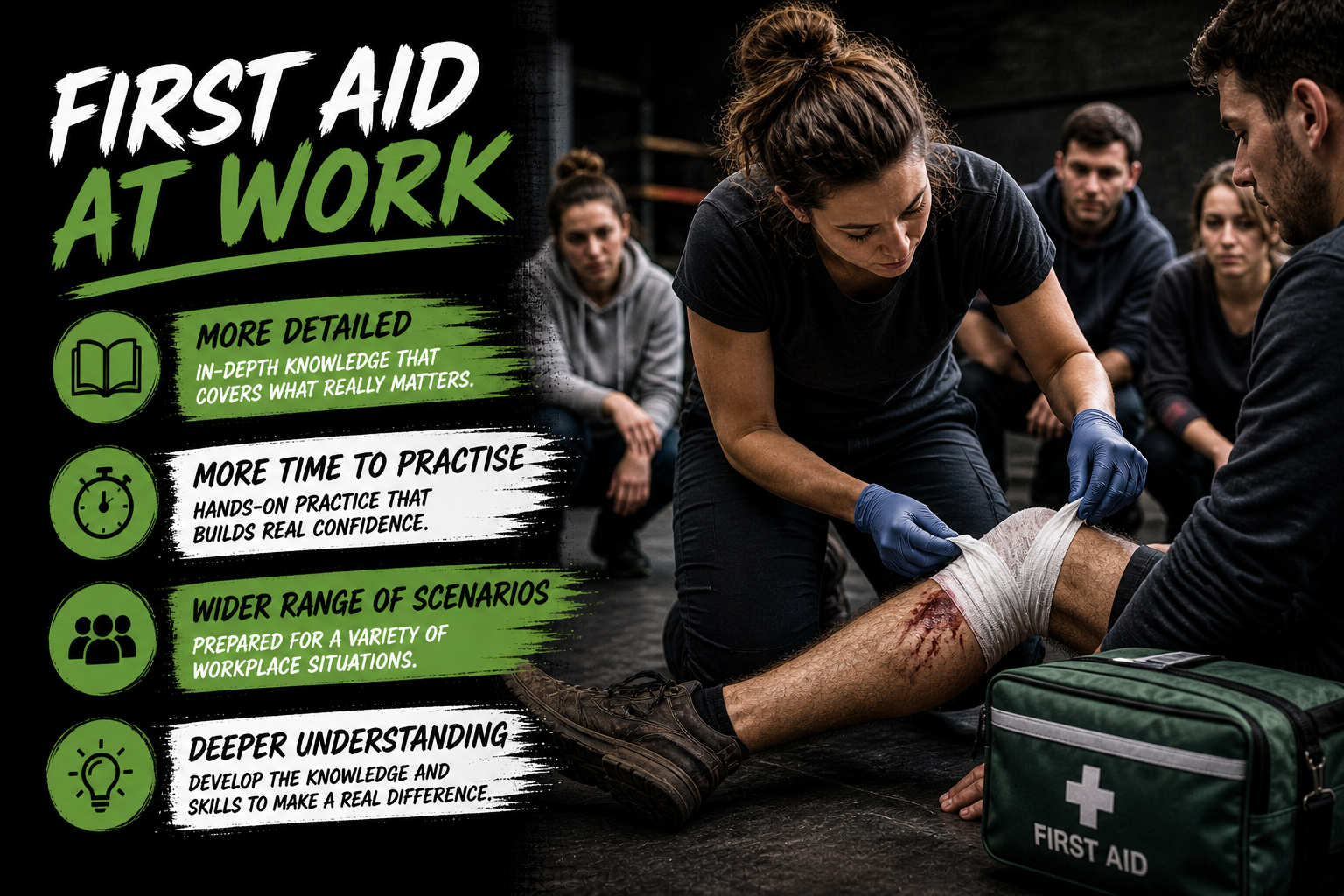
First Aid at Work
more detailed
more time to practise
wider range of scenarios
deeper understanding
Not sure which course to choose?
If you’re unsure, don’t guess.
We can help you decide based on:
your workplace
your risks
your staffing
Final thought
Choosing between First Aid at Work and Emergency First Aid at Work isn’t about picking the quickest option.
It’s about making sure your team is properly prepared if something goes wrong.
Get that right, and you’re not just meeting requirements — you’re protecting your staff.
First Aid at Work vs Emergency First Aid at Work – FAQs
-
It depends on your level of risk. Low-risk environments are usually suitable, but higher-risk workplaces often require First Aid at Work.
-
Not always. The course should match your risk level, not just your budget.
-
Both certificates are valid for 3 years.
-
Often yes. This depends on workforce size, shifts and risk level.
-
Yes. Many learners progress from EFAW to FAW as their role or requirements change.