
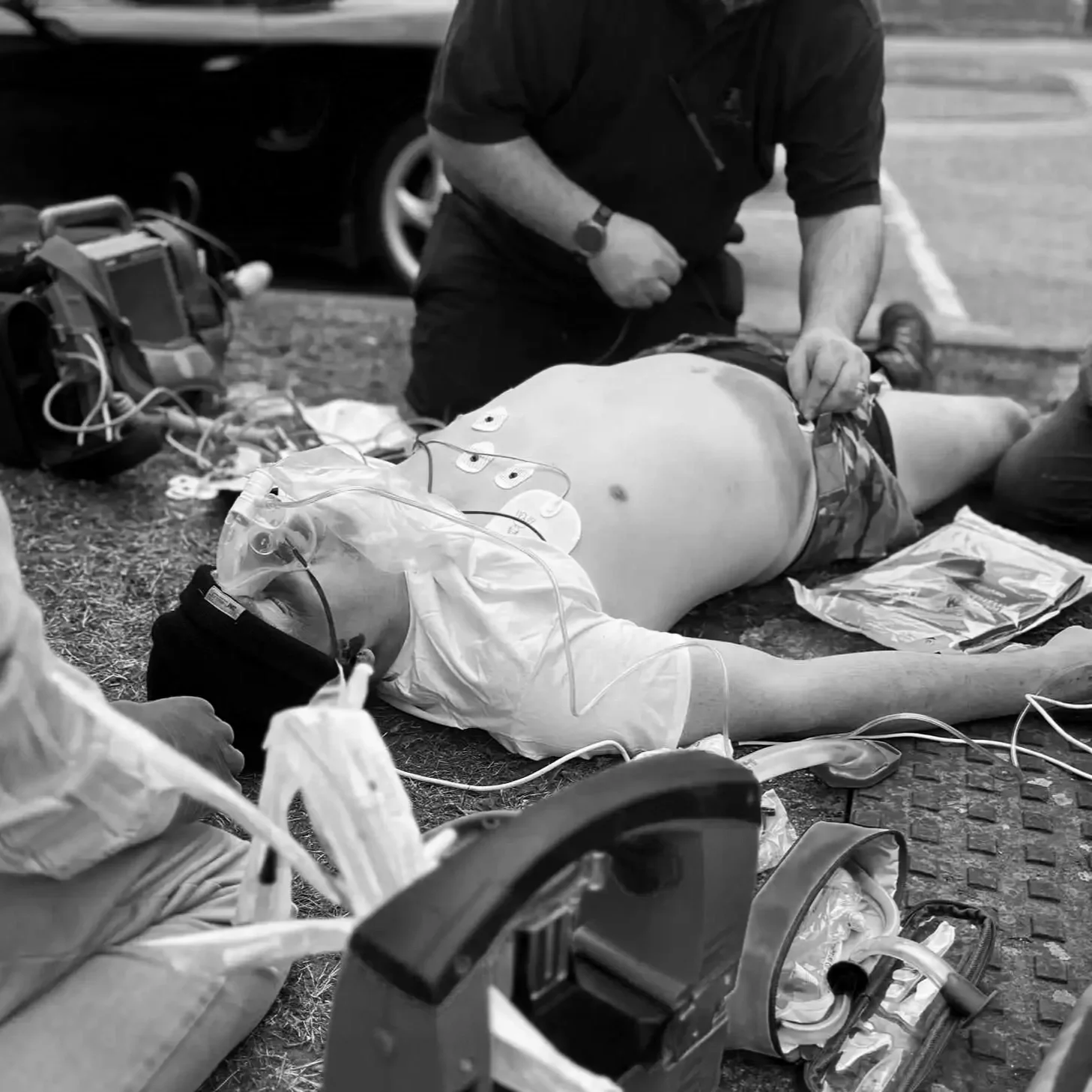
The Complete Guide to FREC Qualifications in the UK
What Is FREC?
FREC® qualifications form a structured pathway of First Response Emergency Care training in the UK. FREC® is a registered trademark, and the qualification framework is developed and awarded exclusively by Qualsafe Awards.
These qualifications are designed for people who may be required to assess and manage medical emergencies in operational environments where professional clinical support is not immediately available.
Unlike standard workplace first aid, FREC training focuses on structured patient assessment, clinical decision-making and the ongoing management of patients until handover to higher-level healthcare services. This structured approach is what distinguishes FREC from short, standalone first aid courses.
The FREC qualification framework was created to meet the needs of sectors such as security, fire and rescue, industrial response teams and other operational roles where responders may be first on scene at serious incidents. You can see how FREC is applied in specialist environments such as confined space rescue and close protection and security roles.
Rather than being a single course, FREC is a qualification framework made up of progressive levels. Each level builds on the one below it, increasing the depth of assessment and responsibility placed on the responder. The most commonly delivered levels are Level 3 and Level 4, which are explained in more detail below.
Understanding how FREC qualifications are structured allows individuals and organisations to choose the right level of training for the role, rather than selecting a course based on name alone. This also links closely to working within an appropriate clinical governance framework, which supports safe practice in higher-level emergency care roles.

On this page
This guide covers the full structure of FREC qualifications and how the different levels fit into operational emergency care roles:
Overview of FREC Qualification Levels
FREC qualifications are structured as a progressive framework, with each level building on the one below it. This structure allows employers and responders to match the depth of training to the level of responsibility within the role, rather than applying one standard across very different operational environments.
As the levels increase, the emphasis moves from immediate emergency response toward more detailed patient assessment, clinical reasoning and decision-making. The most commonly delivered qualifications within the framework are FREC® 3 (Level 3) and FREC® 4 (Level 4), both of which are widely used in roles where responders may be first on scene at serious illness or injury.
| Qualification Level | Designed For | Typical Operational Context | Progression Role |
|---|---|---|---|
| Level 3 (FREC® 3) | Responders who need a recognised emergency care qualification to manage incidents until ambulance services arrive. | Security roles, fire and rescue support, industrial response teams, event response environments. | Entry level within the FREC framework for operational emergency care roles. |
| Level 4 (FREC® 4) | Responders with greater responsibility for patient assessment and ongoing care in higher-risk or more autonomous roles. | Team leaders, advanced responders in security, fire or industrial settings, roles with increased clinical expectations. | Progression level building on Level 3 with deeper assessment and decision-making responsibilities. |
FREC qualifications are nationally recognised and sit on the Regulated Qualifications Framework (RQF), meaning they are formally regulated within the UK qualifications system. This ensures that the structure, assessment and standards align with recognised national qualification criteria.
While both qualifications sit within the same framework, they are designed for different stages of responsibility. Level 3 supports the core emergency response role, while Level 4 reflects a move toward more advanced assessment and greater independence within an organisation’s scope of practice.
This guide explains how these levels differ and how they fit into the wider qualification structure. The sections below look at each level in more detail, while course pages and sector-specific articles provide information for particular roles and pathways.
Understanding FREC 3
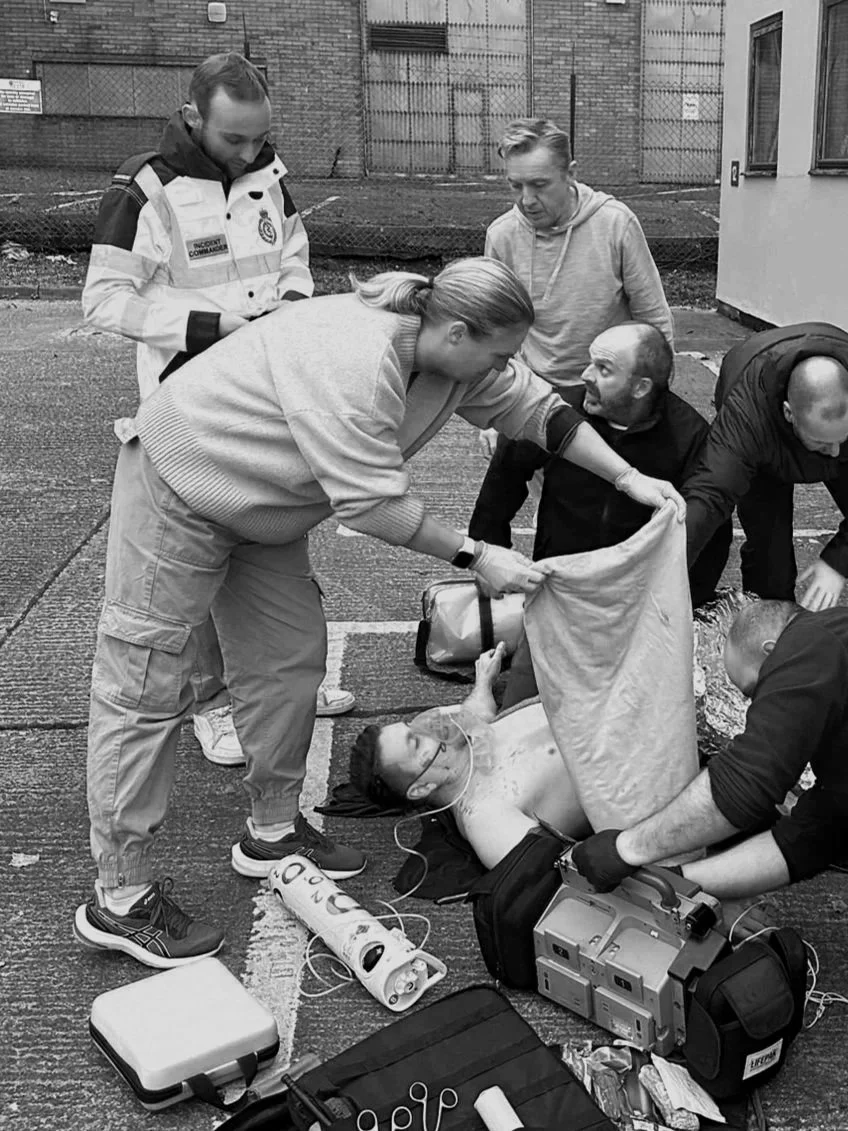
FREC® 3 represents the entry point into the regulated First Response Emergency Care qualification framework for operational responders. It is designed for individuals who may be required to manage emergency incidents in environments where immediate ambulance support is not yet on scene.
The qualification supports a structured approach to patient assessment and the management of illness and injury within the limits of a defined responder role. It is commonly used in sectors where responders may be first to reach a patient, including security and close protection roles, industrial response teams and support roles within fire and rescue environments.
FREC 3 provides a nationally recognised standard that helps organisations ensure responders are trained to operate within a consistent framework, rather than relying on ad-hoc or informal training. This supports safer decision-making, clearer role boundaries and more effective communication during incidents.
While it sits above standard workplace first aid, FREC 3 remains focused on the responder role rather than advanced clinical practice. The emphasis is on recognising serious conditions, managing immediate risks and supporting the patient until handover to ambulance services.
For details about course structure, entry requirements and delivery formats, see the FREC® 3 course page.
Understanding FREC 4
FREC® 4 builds on the foundation established at Level 3 and represents a progression within the regulated First Response Emergency Care qualification framework. It is intended for responders who hold greater responsibility for patient assessment and ongoing management in environments where clinical decision-making may need to be sustained over time.
At this level, the focus moves beyond immediate life-saving intervention towards a more structured, systematic approach to patient assessment and the management of a wider range of illness and injury. This reflects the needs of roles where responders may be required to make more independent clinical decisions within their organisation’s defined scope of practice.
FREC 4 is commonly used in settings where responders are expected to contribute beyond the initial response phase, including team leader roles and advanced responder positions in security, industrial, and other high-risk operational environments. It also allows organisations to set a clearer standard for what Level 4 responders are trained to do, supporting safer practice and clearer role boundaries.
Because of this increased responsibility, entry to FREC 4 is subject to defined prerequisites, including evidence of prior learning, ongoing CPD and structured pre-course preparation. These requirements are in place to ensure learners are ready to operate safely at this level.
For a detailed breakdown of what is required before progressing, see our guide to FREC® 4 entry requirements. For full information about progression routes and delivery formats, see the FREC® 4 course page.
FREC 3 vs FREC 4: Key Differences
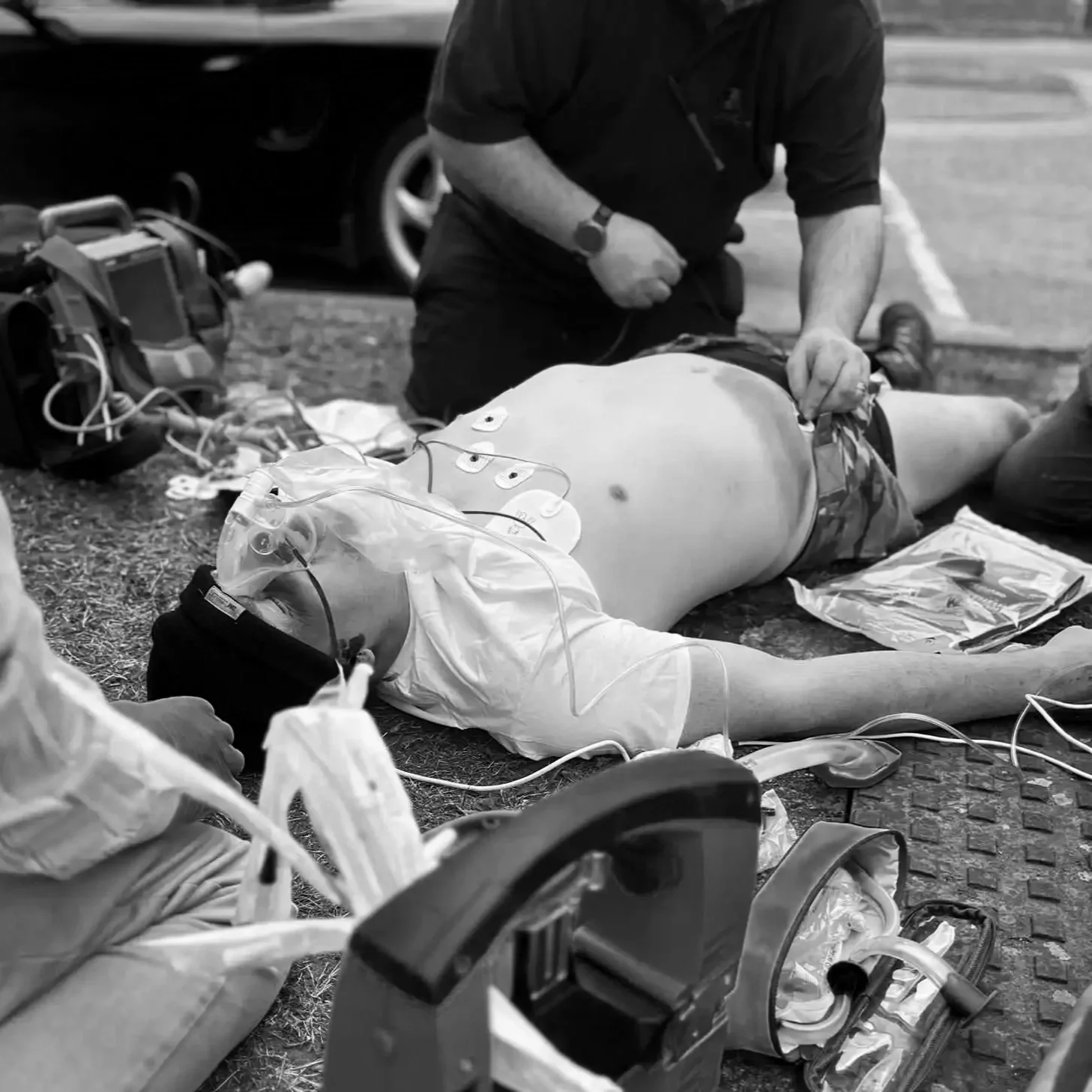
While both qualifications sit within the same regulated framework, they represent different stages of responsibility within an operational emergency care role. The progression from Level 3 to Level 4 reflects a shift from immediate incident response toward more structured assessment and sustained patient management within defined organisational boundaries.
At a high level, the difference is less about individual techniques and more about scope, responsibility and depth of clinical decision-making.
| Area | FREC® 3 (Level 3) | FREC® 4 (Level 4) |
|---|---|---|
| Primary Focus | Immediate emergency response and initial patient management | Ongoing assessment and structured management beyond the initial response phase |
| Role Responsibility | Entry-level operational responder within the emergency care framework | Increased responsibility and expectation of independent judgement within the responder role |
| Decision-Making | Guided response within a defined framework | Greater emphasis on structured clinical reasoning within scope |
| Typical Use | First response environments where ambulance support is pending | Roles requiring more sustained involvement in patient care and incident management |
| Position in Framework | Entry point into operational emergency care qualifications | Progression from Level 3 with deeper assessment expectations |
For a more detailed breakdown of training structure, expectations and progression routes between these qualifications, see our full comparison guide on FREC 3 to FREC 4.
Recognition of Prior Learning (RPL)
Recognition of Prior Learning (RPL) allows learners with relevant previous training or qualifications to have that experience considered when progressing within the FREC qualification framework. It is designed to reduce unnecessary duplication of learning where existing knowledge and competence can be evidenced against the outcomes of the qualification.
Within FREC progression, RPL is most often discussed by responders who already work in emergency or first response environments and want their existing training recognised. This commonly includes those holding qualifications such as FPOS, Community First Responders (CFRs), operational firefighters, student paramedics and others with recognised emergency care backgrounds. In these cases, previous learning may be mapped against the qualification outcomes to determine whether elements of prior training can be recognised.
For example, learners coming from an FPOS background often want to understand how that qualification compares with FREC® 3. You can read more about that relationship in our guide to FPOS vs FREC 3. Similarly, those who hold trauma-focused prior learning may find it useful to see how their training aligns with the FREC pathway, as discussed in our article on RTACC vs FREC 3.
RPL is not automatic and is subject to awarding body requirements and evidence standards. Learners must be able to demonstrate that their previous training aligns with the knowledge and competence expected at the relevant level. This ensures that progression maintains the integrity, consistency and safety standards of the qualification framework.
For more information about how Recognition of Prior Learning applies to FREC progression routes — including the use of an online eligibility checker to help determine suitability — see our FREC® 3 RPL route page.
Who Uses FREC Qualifications?
FREC qualifications are used across a range of operational settings where personnel may need to respond to medical emergencies before ambulance services arrive. Rather than being tied to a single profession, the framework supports roles where emergency care knowledge forms part of a broader operational responsibility.
One of the most common user groups is the security sector. This includes close protection operatives, event security teams and those working in higher-risk or remote contexts where immediate access to medical support may be delayed. In these roles, having a structured and recognised emergency care qualification helps support safer response, clearer role boundaries and defined levels of responsibility. You can read more about how FREC training applies in these contexts on our page covering FREC training for close protection, security and police roles.




FREC qualifications are also relevant in industrial and infrastructure settings, where site response teams may be expected to manage incidents on-site as part of workplace safety and resilience arrangements. In these settings, responders may work alongside fire safety teams or site management within a wider emergency plan, with training aligned to the level of risk and responsibility involved.
Within the emergency services landscape, elements of the FREC framework may also be used in fire service support and specialist response roles, particularly where personnel operate in environments that require structured medical response alongside rescue or technical duties. Many fire and rescue services have historically delivered internal Immediate Emergency Care (IEC) training programmes, and in some areas there has been a gradual shift toward externally regulated qualifications such as FREC to provide clearer standards, consistency and alignment with recognised frameworks. Similarly, fire and rescue support roles, community response schemes and some healthcare-adjacent positions may use FREC qualifications as part of a structured training pathway.
Across these sectors, the key role of FREC qualifications is to define the level at which a responder is trained to operate. This helps organisations align training with operational risk, responsibility and clinical governance requirements, ensuring that emergency care capability is supported by appropriate oversight and standards.
Scope of Practice, Clinical Governance and National Frameworks
While FREC qualifications define a structured level of training and competence, they do not by themselves determine what a responder may do in practice. Scope of practice is always shaped by operational role, employer policy, clinical governance arrangements and local authorisation, not simply by the title of a qualification.
FREC qualifications sit on the Regulated Qualifications Framework (RQF) and are delivered under awarding body regulation recognised by Ofqual. This means the structure, assessment and standards of the qualification are formally controlled within the UK qualifications system, providing consistency and accountability across training centres and learners. However, regulation of a qualification is separate from regulation of practice; operational authority still rests with employers and governance systems.
Within any organisation, responders work under defined responsibilities and oversight structures. Clinical governance provides the framework that ensures training, decision-making and patient care are supported by appropriate policies, supervision and quality assurance processes. This helps ensure that emergency care is delivered safely, consistently and in line with recognised standards. You can read more about how governance structures support emergency care roles on our page covering clinical governance services.
FREC qualifications are also structured around the Faculty of Pre-Hospital Care PHEM skills framework, which describes competencies expected at different levels of pre-hospital care. FREC 3 aligns with Level D of this framework, while FREC 4 aligns with Skill Set E, reflecting progression from initial emergency response into more detailed patient assessment and clinical decision-making responsibilities. This alignment supports benchmarking of responder capability within the wider pre-hospital emergency medicine (PHEM) landscape, while still recognising that qualification level does not replace professional registration or advanced clinical pathways.
Awarding body qualification specifications set out learning outcomes, assessment methods and competency expectations, including practical assessment and applied skills testing that reflect the operational nature of pre-hospital care roles. The framework supports progression in responsibility and decision-making, but operational scope remains defined by governance, role and authorisation rather than qualification title alone.
In some situations on FREC 3, optional clinical skills modules may be available alongside core qualification outcomes. These can include interventions such as supraglottic airway devices, blood glucose monitoring or the use of certain analgesic agents. However, these elements are not universally included and are only appropriate where there is a clearly defined operational requirement and a supporting clinical governance framework. Holding a qualification alone does not automatically authorise the use of these skills in practice; authorisation, governance and local policy always take precedence.
This distinction between qualification level, national regulatory frameworks and operational scope is important. It ensures that responders work within clearly defined boundaries and that emergency care capability is matched to both risk and oversight rather than assumed from training alone.
Career Pathways After FREC
FREC qualifications form part of a structured development pathway within responder-level pre-hospital care roles. Rather than being an end point, each level supports increasing responsibility, clinical reasoning and operational decision-making within defined governance limits.
For many learners, FREC 3 provides a foundation for roles where they may be first on scene and required to manage life-threatening conditions while working within clear escalation pathways. One of the most common applications at this level is within event medical cover, where responders operate as part of a team providing immediate care at public events. Others may require FREC 3 as part of their occupational role, including close protection operatives and security roles and some police and fire service support roles.
Some Community First Responders also choose to complete FREC qualifications as part of their continuing professional development. However, it is important to recognise that FREC is not a requirement to become a first responder within NHS community schemes, as individual ambulance trusts provide their own training, governance and scope frameworks.
Progression beyond Level 3 often involves moving to FREC 4, which builds on the foundations of Level 3 with greater depth in assessment, decision-making and patient management. This reflects a shift from immediate life-saving intervention toward more detailed clinical reasoning within a responder’s scope of practice.
For those aiming to progress further into pre-hospital care roles with greater clinical responsibility, additional pathways exist beyond the FREC framework. Some learners move on to higher-level qualifications such as FREUC 5, while others progress into structured NHS pathways. A common route is development into an Associate Ambulance Practitioner (AAP) apprenticeship or equivalent role within an ambulance trust. This level of practice, sometimes still informally referred to as Emergency Medical Technician (EMT), involves a more autonomous scope and therefore requires a higher level of knowledge, skill and clinical governance.
Beyond this stage, progression to Paramedic level requires formal higher education and professional registration pathways. This may involve employer-supported routes within ambulance services or university-based paramedic science degrees, followed by structured development and governance processes before operating independently. These pathways fall outside the scope of responder-level qualifications but illustrate how FREC can sit at the early stages of a broader professional journey in pre-hospital care.
FREC qualifications therefore sit within a wider development landscape: supporting entry-level responder competence, progression in assessment and responsibility, and, for some learners, acting as a stepping stone toward more advanced roles where additional education, regulation and governance apply.
Frequently Asked Questions About FREC
-
Yes. FREC qualifications sit on the Regulated Qualifications Framework (RQF) and are regulated by Ofqual. This ensures the structure, assessment and standards of the qualification are formally controlled within the UK qualifications system.
-
FREC 3 focuses on immediate life-saving care, scene safety and structured escalation. FREC 4 builds on this with greater depth in patient assessment, clinical reasoning and ongoing management within a responder’s scope of practice.
-
Requirements vary depending on the event provider and their governance arrangements. FREC qualifications are commonly used as a benchmark for responder capability in event environments, but experience, role and organisational policy also influence eligibility.
-
No. NHS ambulance trusts provide their own training and governance frameworks for Community First Responders. Some CFRs choose to complete FREC qualifications as part of their continuing professional development, but it is not a requirement for joining a CFR scheme.
-
In some cases, yes. Learners with relevant prior qualifications or experience may be eligible via a Recognition of Prior Learning (RPL) route, subject to awarding body requirements. You can read more about this on our FREC 3 RPL route page.
-
FREC qualifications are widely used in higher-risk security environments where responders may need to manage medical emergencies in remote or dynamic settings. Requirements depend on the role, organisation and governance structure. More detail is available on our FREC training for security and close protection page.
-
No qualification alone determines scope of practice. The use of clinical skills is governed by employer policy, operational role and clinical governance arrangements. Some specifications include optional additional skills modules, but these are only appropriate where there is a genuine operational requirement and a supporting governance framework.
-
FREC 3 supports entry-level responder roles such as event medical teams, security environments and some fire or industrial response settings. It also forms the foundation for progression to FREC 4.
-
FREC 4 represents the upper level of responder qualifications within the FREC framework. Further progression typically involves higher-level qualifications or structured NHS pathways such as Associate Ambulance Practitioner (AAP) or Paramedic training, which require additional education, governance and professional regulation.
-
No. FREC supports responder-level emergency care roles. EMT/AAP and Paramedic roles involve broader scopes of practice, formal professional pathways and different governance structures. FREC does not replace these routes.
Choosing the Right FREC Qualification
FREC qualifications are designed to support responders who may be required to manage medical emergencies before ambulance services arrive. They sit within a structured framework that balances practical skills, clinical reasoning and governance considerations.
Choosing the appropriate level depends on your role, responsibilities and the environment you work in. For some, FREC 3 provides a foundation for event medical work or security environments where immediate care and safe escalation are essential. For others, FREC 4 supports roles requiring deeper assessment and decision-making within a responder’s scope.
Progression through the FREC levels reflects increasing depth of assessment and responsibility, but qualification level alone does not determine scope of practice. Operational role, employer policy and clinical governance arrangements remain central to safe practice. Understanding where your responsibilities sit within these frameworks is just as important as the qualification itself.
If you are unsure which level is appropriate, consider the type of incidents you may be expected to respond to, the level of autonomy within your role and the governance structure that supports your practice. Matching qualification level to operational reality helps ensure both confidence and safety in the field.
FREC qualifications are therefore best viewed not simply as courses, but as part of a wider system of emergency response capability. Whether you are entering responder roles for the first time or building on existing experience, understanding this structure helps you make informed decisions about training and progression.